As an Amazon Associate, we earn from qualifying purchases. Some links on this site are affiliate links at no extra cost to you. Our recommendations are based on thorough research and editorial judgment.


Understanding Calluses: A Guitarist’s Badge of Honor

Calluses are a guitarist’s badge of honor! They form as fingertips endure friction and pressure during practice. Consistent playing helps develop tough, protective skin. Varying practice routines, choosing lighter strings, and maintaining good hand positions support callus growth. Keeping calluses moisturized, without overdoing it, is essential for comfort. Regular breaks help prevent injury. Remember, those hard-earned calluses show your dedication! Stick with it, and discover why they truly matter as you continue on your musical journey!
Key Takeaways
- Calluses form as a protective response to friction and pressure from guitar strings, enhancing playing comfort and skill.
- Consistent practice of 15-30 minutes daily allows for effective callus development and minimizes finger soreness.
- Lighter gauge strings ease finger pressure, facilitating callus formation while being friendlier to beginner guitarists.
- Proper hand positioning and regular practice contribute to durable calluses and improve overall playing technique.
- Maintaining calluses requires care, including avoiding excessive moisture and not picking at them to ensure optimal comfort.
The Science Behind Calluses
While learning to play guitar, many musicians encounter the fascinating process of callus formation. Calluses develop due to repeated friction and pressure on the fingertips, creating a thicker layer of skin for protection during guitar playing. Initially, musicians might experience blistering as the skin reacts, forming a fluid-filled cushion before hardening. Genetics also play a role, as some individuals develop calluses faster than others. Engaging in effective guitar techniques that distribute pressure evenly can promote better callus development. Consistent practice leads to stronger calluses, which ultimately allows for pain-free playing. Additionally, increased blood circulation during practice supports skin health. Embracing calluses can be seen as a badge of honor for guitarists, marking their dedication and journey in mastery! Quality materials contribute to overall sound quality and playability, making the journey more rewarding.
Consistency Is Key
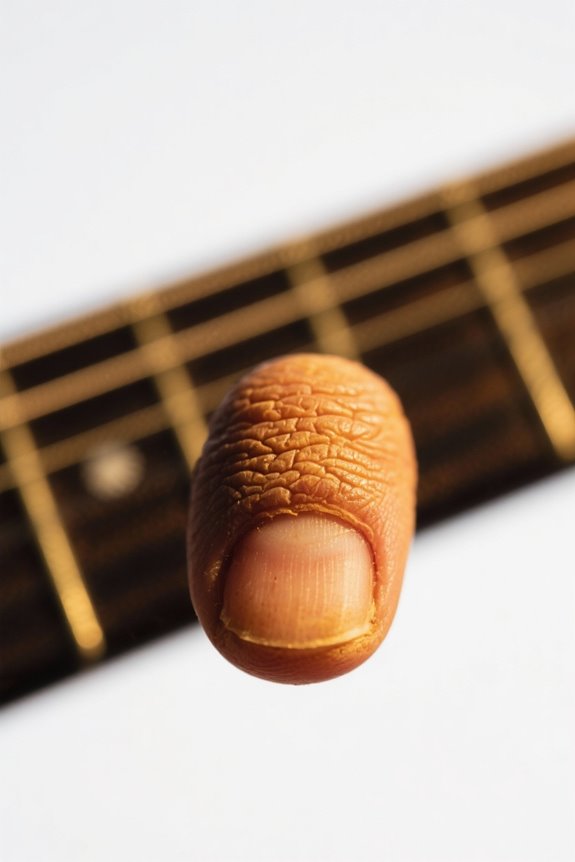
Developing strong calluses on fingertips requires a commitment to regular practice. Consistency is key! Daily practice sessions of just 15-30 minutes can effectively build calluses without risking injury. Guitarists should gradually increase their practice time, which helps fingers adapt while minimizing soreness. It’s also important to vary finger movements during practice to guarantee even callus development. Establishing a disciplined practice routine fosters the endurance needed for longer playing sessions. Remember, listening to your body is essential—if something feels off, take a break. This mindful approach, combined with consistent effort, will lead to stronger calluses and ultimately improve your guitar skills. Additionally, maintaining proper equipment care for your thumb picks can enhance your overall playing comfort and effectiveness. Stick with it, and you’ll notice significant progress! Keep strumming and enjoy the journey!
Recommended Products

THE ORIGINAL SPRING-LOADED HAND & FINGER EXERCISER: Prohands is used by professional athletes, world-class musicians, and as a rehabilitation tool. Made from high-quality components ABS plastic, stainless steel springs and approved santoprene.

Your Smart Entertainment & Fitness Tracker - Connect via Bluetooth to control short video platforms, e-books, and interactive games hands-free. The app doesn’t just count reps; it tracks your workout data, helping you monitor progress and stay motivated. Turn screen time into active, stress-relieving exercise (Note: It Does Not Provide Grip Strength Measurement, Nor Does It Offer Adjustable Resistance)

Strengthen Fingers And Hands – Use CanDo Digi-Flex Exercisers to develop finger, hand and forearm strength, and to improve flexibility, dexterity and coordination. Perform complete exercises by doing individual finger and whole-hand compressions.
Choosing the Right Strings
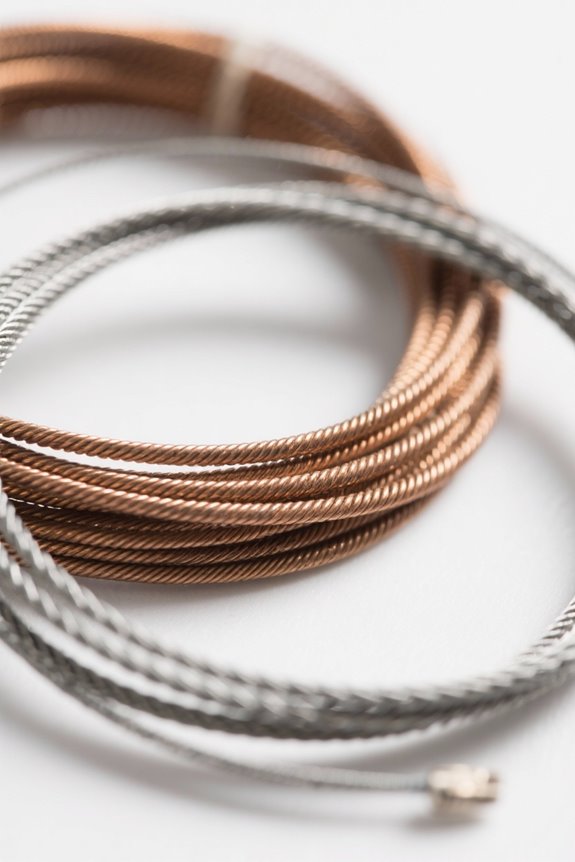
Choosing the right strings for a guitar can make a significant difference, especially for those building calluses. Beginners often benefit from lighter gauge strings, like .009s, since they require less finger pressure, making playing more comfortable. This can help new players develop calluses without too much pain! However, heavier strings can foster quicker callus formation due to their increased tension, although they may lead to more discomfort early on. When selecting string materials, nickel-wound strings typically feel softer than stainless steel, which is brighter but might be harsher on fingertips. Additionally, light gauge strings allow for easier fretting and strumming, making them an excellent choice for players seeking comfort during their practice sessions. Experimenting with various gauges and materials enables players to find a comfortable mix, enhancing their playing experience while effectively developing calluses for that proud guitarist badge of honor!
Recommended Products

5 string banjo with Maple resonator and rim

DIMENSIONS: Neck Width at the Nut 1 1/4″, Scale Length Nut to Bridge 26 1/4″, Resonator diameter 13 7/8″, Overall Instrument Length 38″, Weight Approx. 8 lbs

5 string banjo with Mahogany resonator and rim
Proper Hand Positioning
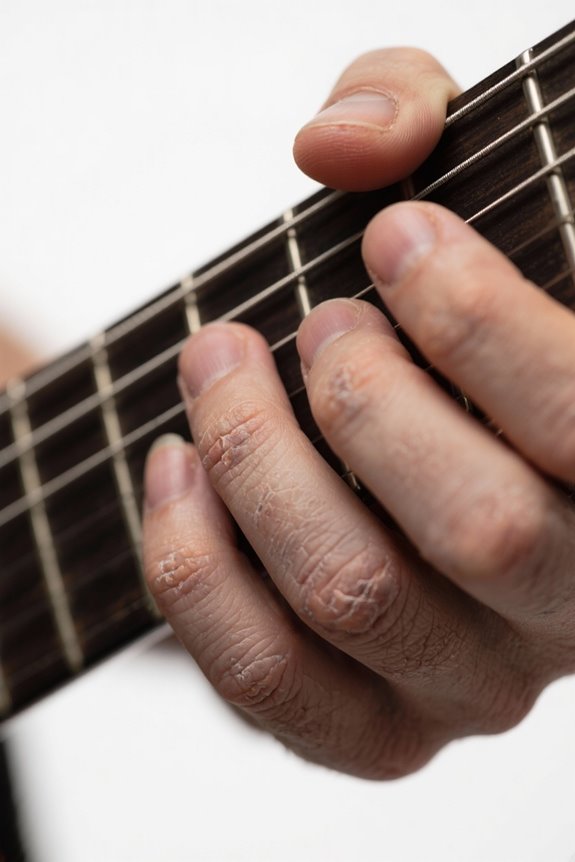
Getting the right strings is just the beginning of a guitarist’s journey; proper hand positioning is where the magic really happens! To master this, your fingers should curve naturally, hovering close to the fretboard. This position allows for efficient pressing of strings with your fingertips, enhancing sound quality and promoting even callus development. Pay special attention to wrist alignment, as good positioning prevents strain while allowing ideal finger placement. A guitar strap is also essential; it helps distribute the instrument’s weight, giving you better control. Remember to regularly check your hand position during practice. This simple habit not only enhances playing health but also prevents discomfort and poor habits, setting you up for successful, enjoyable play! Additionally, a well-balanced setup can contribute to enhanced audio clarity and improve your overall playing experience as a guitarist.
Maintaining Your Calluses
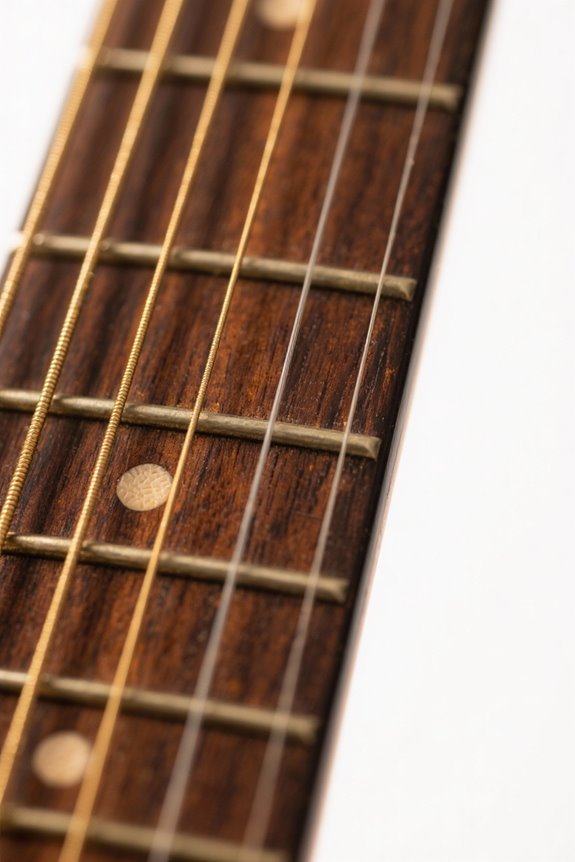
A strong callus can make all the difference for a guitarist! To maintain durable calluses, regular practice is key—playing daily helps keep those protective layers intact. It’s also essential to moisturize your fingertips, but don’t overdo it! Too much moisture can soften calluses, making them less effective. Specialized hand balms made for guitarists can help strike that balance. Guitarists should avoid picking at or peeling calluses, as this damages the skin, hindering its development. Ensuring correct hand positioning while minimizing pressure during playing boosts comfort and helps preserve callus integrity. With the right care, guitarists can enjoy long-lasting calluses, enhancing their playing experience and overall technique! Additionally, maintaining optimal humidity levels for your instrument is crucial, as it prevents wood warping and cracking. Keep strumming and show off those resilient fingertips!
Why Calluses Matter
Strong calluses are not just a sign of a guitarist’s hard work; they also play an essential role in making playing enjoyable. As beginners or experienced players develop calluses, their fingertips become resilient to pressure on strings so that fingers hurt less during long sessions. This protection results from the repeated friction against guitar strings, enabling musicians to focus more on their technique. Well-formed calluses guarantee a firmer grip and help reduce buzzing sounds, improving overall sound quality. In the guitar world, calluses serve as a badge of honor, marking a guitarist’s dedication and progress. Developing calluses is a good thing—it allows players to practice longer, gain control, and enjoy the journey of playing guitar like never before! Additionally, the choice of coated guitar strings can further enhance comfort and reduce finger fatigue during extended playing sessions.
Overcoming Setbacks
While playing guitar can be incredibly rewarding, many beginners face setbacks that can feel discouraging. Sore fingers are common, but they are a normal part of developing calluses. Consistent practice sessions are essential; they help the fingers adapt to the pressure of playing guitar. However, it’s important to listen to your body! If pain becomes too much, take a break. Short pauses can prevent injury and allow calluses to form more effectively. Remember, every guitarist has faced challenges with finger pain, so don’t feel alone. If you take time off, you might lose those hard-earned calluses, which means gradually rebuilding when you return. Additionally, understanding the importance of sound quality and design can enhance your overall playing experience. Persevere through the discomfort, and you’ll find that playing becomes easier and more enjoyable!
Frequently Asked Questions
What Do Professional Guitarists Do About Calluses?
What strategies do professional guitarists employ for ideal callus care? They prioritize pain management through finger exercises, select appropriate strings, refine practice techniques, and utilize guitar accessories, ensuring effective callus maintenance while benefiting their unique playing styles.
What Are the Calluses of a Guitarist?
The calluses of a guitarist are hardened skin that develops through consistent practice, enhancing finger strength and playing comfort. Proper callus maintenance, including skin care, aids in grip pressure, tone production, and soreness relief during extended playing durations.
Can I Still Play Guitar With Calluses?
Yes, one can still play guitar with calluses. Proper guitar maintenance tips include effective callus care, finger positioning, and consistent practice routines, enhancing playing comfort across string types, while also addressing performance anxiety through hand exercises and gear essentials.
How Long Do You Have to Play Guitar to Get Calluses?
Surprisingly, after just 15-30 minutes of daily guitar practice for 2 to 4 weeks, callus formation begins, reducing finger sensitivity. However, proper fretting technique and string pressure play vital roles in achieving necessary callus maintenance.