As an Amazon Associate, we earn from qualifying purchases. Some links on this site are affiliate links at no extra cost to you. Our recommendations are based on thorough research and editorial judgment.


The Basics of Musical Dynamics: Playing Loud and Soft

Musical dynamics are all about playing loud and soft to express different emotions! Markings like “piano” for soft and “forte” for loud help guide performers. Techniques such as crescendo, which means gradually getting louder, and decrescendo, getting softer, create exciting contrasts in music. These dynamic changes can convey feelings of joy or sadness, making your performance more engaging! If you explore these concepts further, you’ll discover even more ways to enhance your musical storytelling.
Key Takeaways
- Dynamics in music refer to variations in loudness, influencing emotional expression and listener engagement.
- Common dynamic markings include “p” for soft, “f” for loud, and “mp” or “mf” for moderate levels.
- Crescendos gradually increase volume, creating tension, while decrescendos decrease volume, providing calm conclusions.
- Dynamics enhance the storytelling aspect of music, conveying emotions of joy, sorrow, and drama.
- Performance instructions like accents and tenuto guide musicians on delivering expressive and impactful musical moments.
Understanding Dynamics in Music
Music is like a vibrant journey, where dynamics play a key role in shaping the experience. Dynamics refer to the variations in loudness and softness in a piece, allowing musicians to convey deep emotions. Dynamic markings in music notation, like pianissimo for very soft and forte for loud, guide performers in their expression. These markings help musicians understand when to gradually increase volume with a crescendo, inviting the audience in, or to gradually decrease with a decrescendo, creating suspense. By interpreting these changes, performers craft a musical story that resonates. Engaging with the emotional context of dynamics not only enriches the performance but also helps connect with listeners, making each rendition unique and memorable! Additionally, musicians may enhance their performance with low latency processing, ensuring a seamless connection between their instruments and the digital interface.
Recommended Products

Accompaniment Styles add a "backing band" when you play or perform for dynamic and professional results. Customize and personalize your music while maintaining control over chord changes and arrangements.

The motion control synthesis engine unifies and controls two iconic sound engines: AWM2 (high-quality waveform and synthesis) and fm-x (modern, pure frequency modulation synthesis. )

FULL 88-KEY HAMMER ACTION RANGE (A–C): Triple sensor weighted keybed delivers authentic grand piano feel with precise dynamic response for expressive live performance and studio use
Common Dynamic Markings
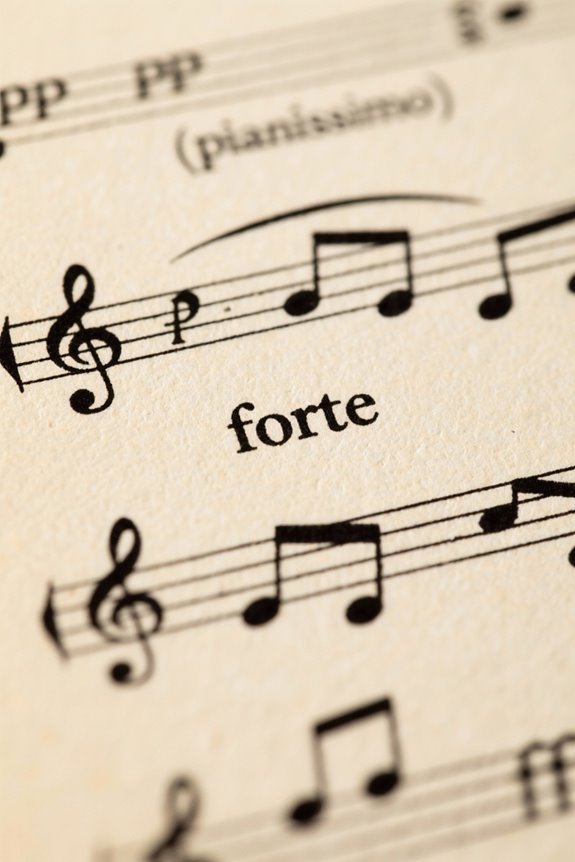
Dynamic markings form the foundation of how music communicates emotion and energy. These markings include symbols like “p” for piano, meaning soft, and “f” for forte, indicating loud. Musicians also encounter “mp” for mezzo piano and “mf” for mezzo forte, which represent moderate dynamics in music. For even softer or louder touches, they find pianissimo (pp) and fortissimo (ff). These Italian terms help create a universal language for musicians, regardless of genre. Additionally, accents marked above or below notes provide sudden emphasis, further enhancing the piece’s expressiveness. By understanding these dynamic markings, musicians can effectively convey the emotional intent of the music, allowing listeners to truly feel the performance! Moreover, incorporating high-quality audio standards in recordings enhances the clarity of dynamic expressions.
The Impact of Crescendo and Decrescendo
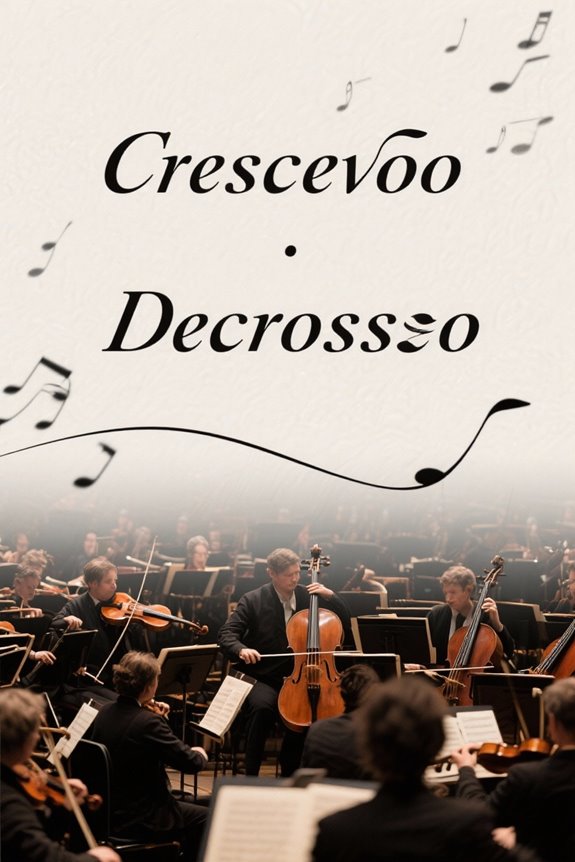
Emotional expression in music often thrives on the power of crescendos and decrescendos. A crescendo, which is a gradual increase in volume, builds excitement and tension. Think of it as a roller coaster climbing towards a thrilling drop! On the other hand, a decrescendo gently decreases the volume, offering a soft and calming conclusion to a musical phrase. These dynamic changes shape the emotional response of listeners, creating contrast and variety. Composers strategically employ both techniques to highlight important moments, drawing attention and enhancing the tonal quality of their pieces. By utilizing crescendos and decrescendos, music reflects varying moods and tells compelling stories, making each performance a unique experience! Additionally, well-produced in-ear monitors can help listeners appreciate these dynamic shifts more fully by delivering enhanced audio clarity.
Recommended Products
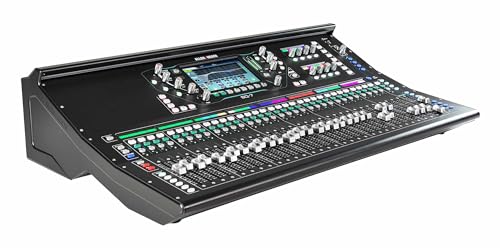
Driven by Allen & Heath’s 96kHz XCVI FPGA engine, delivering exceptional high-resolution audio quality, ultra-low latency of <0.7ms and variable bit depths for optimized dynamic range

40-input channel, 25-bus digital mixing console for Studio and Live application

[ Powerful Multipurpose RF Spectrum Analyzer ] The RF Explorer Pro combines the functionality of a Spectrum Analyzer, Signal Tracking Generator, and Power Meter, all in one user-friendly device. Whether you're a professional technician or an enthusiast, the RF Explorer Pro empowers you to perform precise all RF analysis and optimization
Emotional Expression Through Dynamics

In the world of melodies and harmonies, the way musicians use dynamics is key to revealing a piece’s emotional potential. Dynamics, such as playing softly (piano) or loudly (forte), invite a vast emotional expression in music. Composers use dynamic markings like crescendo and decrescendo, helping performers convey feelings of joy or sorrow through varied volume. By exploring the dynamic range, musicians create highs and lows that resonate deeply with audiences. Sudden changes, marked by terms like subito, can capture attention and evoke dramatic shifts in emotion. This understanding empowers performers to inject their personality into music, fostering a stronger connection with listeners. Ultimately, dynamics transform a simple melody into a powerful story! Additionally, the use of acoustic treatments can enhance sound clarity, allowing dynamics to be expressed more effectively in different environments.
Performance Instructions and Interpretation
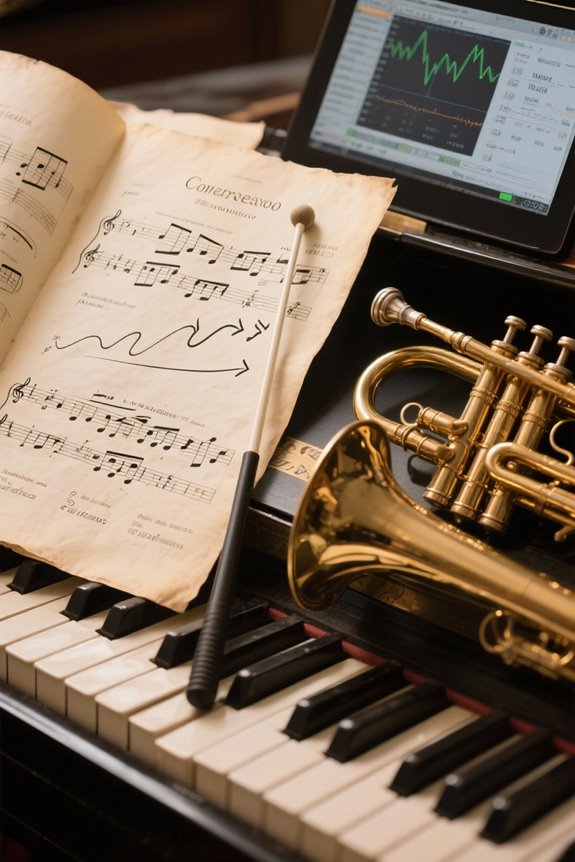
Understanding performance instructions can open up a world of possibilities for musicians, as these guidelines shape how music is expressed. Dynamic symbols, such as Italian terms like “piano” (soft) and “forte” (loud), guide musicians on volume and emotional intent. They also encounter instructions that indicate playing gradually quieter or gradually louder. Markings like “mezzo piano” and “mezzo forte” help create balance in performances. Additionally, directives such as “accent” for sharp emphasis or “tenuto” for sustained notes play essential roles in conveying character. Musicians can even use “subito” for sudden changes in dynamics, creating impactful dramatic moments. Ultimately, learning to understand dynamics adds depth and richness to every performance! Furthermore, exploring different string materials can lead to variations in tonal quality, enhancing dynamic expression in performances.
Recommended Products

Essential Grand Piano Sound - Enjoy the rich, dynamic sound of an acoustic piano plus 9 other instrument Voices

Bundle includes: Alesis Special Edition 8 Inch Mesh Kick Pad and Silverline Audio 10ft Connection Cable

ID10D4 V.4 - Image Dynamics 10" 300W RMS 600W Max Dual 4-Ohm V.4 Subwoofer
The Role of Dynamics in Musical Arrangement
The way dynamics are incorporated into musical arrangements plays a significant role in defining a piece’s character. Dynamics, like forte (loud) and piano (soft), create contrast and interest. For example, a crescendo gradually increases volume, while a decrescendo does the opposite, helping to build tension or resolve it. Understanding dynamics is a vital part of engaging listeners, as variations in loudness can evoke emotions and enhance storytelling. Additionally, effective use of dynamics can differentiate sections of a composition, ensuring the audience stays captivated. By strategically employing these examples of dynamics, composers shape the emotional landscape of their music. Basically, dynamics not only enrich a piece but also amplify its overall impact! Furthermore, the importance of sound isolation in music production can greatly enhance the clarity of dynamics, allowing each nuance to be experienced fully.
Recommended Products

Produce with a special edition of UA's elite-class Apollo x16 interface, including a premium suite of award-winning UAD plug-ins worth over $2,400

For Hybrid Production in Studio & Stage, 4 Console-Grade SuperAnalogue Mic Pres

Frequently Asked Questions
What Are the Dynamics of Loud and Soft?
The dynamics of loud and soft involve piano techniques and forte expressions that create dynamic contrast. Gradual crescendos and expressive phrasing enhance emotional depth, allowing performers to convey nuanced feelings within a musical composition.
What Are the Dynamics in Music Soft to Loud?
Dynamics in music, ranging from soft to loud, involve piano techniques that utilize dynamic contrast. Expressive playing emphasizes volume variations, enhancing musical expression and creating emotional depth within compositions, engaging listeners through dynamic range development.
What Is the Order of Dynamics From Loudest to Softest?
The order of dynamics from loudest to softest includes fortissimo, forte, mezzo forte, mezzo piano, piano, and pianissimo. These dynamic markings facilitate expressive playing and utilize crescendo techniques to explore the full dynamic range.
What Is the Musical Term for Louder and Softer?
The musical terms for louder and softer are embodied within dynamic markings, the symbols that illuminate dynamic contrast. Through expressivity techniques, “forte” and “piano” guide performers, painting vibrant landscapes of sound, transforming emotion.


