As an Amazon Associate, we earn from qualifying purchases. Some links on this site are affiliate links at no extra cost to you. Our recommendations are based on thorough research and editorial judgment.


Electronic Drums Vs Acoustic Drums for Beginners

When deciding between electronic and acoustic drums, beginners should consider their unique benefits! Electronic drums are quieter, making them perfect for home practice, and they’re often more budget-friendly. They also have cool built-in features like metronomes to help with timing. On the other hand, acoustic drums provide a rich, authentic sound and dynamic feedback that can enhance skill development. Each option has something special to offer, so think about your space and style to choose what’s best! There’s even more to explore on this topic.
Key Takeaways
- Electronic drums are more budget-friendly for beginners, typically ranging from $300 to $800, compared to acoustic kits starting at $400.
- Acoustic drums provide a richer, organic sound quality, while electronic drums offer consistent sound through advanced sampling techniques.
- Electronic kits are quieter, ideal for home practice, producing noise levels around 60 to 75 decibels compared to 120 decibels for acoustic drums.
- Space-efficient designs of electronic drums make them suitable for smaller areas, while acoustic kits require more space for setup.
- Electronic drums often feature built-in practice tools, simplifying learning, whereas acoustic drums enhance stick technique and overall musicality through natural feedback.
Sound Quality Comparison
How does sound quality differ between electronic and acoustic drums? The heart of acoustic drums lies in their physical vibrations, creating a rich and organic tonal richness. This natural sound resonates beautifully, offering musicians dynamic performances marked by slight imperfections. On the other hand, electronic drums generate sound digitally, providing remarkable sound consistency with less variation. They can replicate various drum sounds instantly, enhancing creativity! High-end electronic kits even aim to mimic the nuances of acoustic drums using advanced sampling techniques. Additionally, the mesh head technology used in many electronic kits enhances comfort and provides a natural feel for drummers. While acoustic drums deliver an authentic sound favored in many genres, electronic drums shine in versatility. Furthermore, electronic sets can replicate traditional drum kits and electronic beats, making them appealing for modern music styles. Ultimately, both options cater to different tastes and needs, letting drummers find their perfect rhythm in music creation!
Playability and Feel
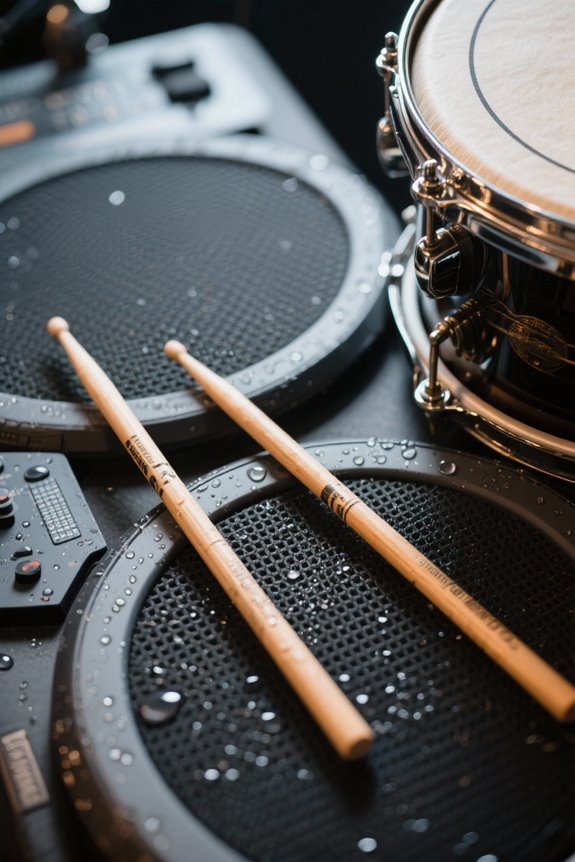
After exploring the differences in sound quality, it’s clear that playability and feel are just as important for drummers. Acoustic drums provide natural rebound sensitivity, allowing players to feel the vibration and dynamics of the drumhead. This tactile feedback helps develop essential timing and technique skills! On the other hand, electronic drums often use rubber or plastic pads, which can feel less natural, though mesh heads improve this experience slightly. Beginners may find the consistent rebound on electronic pads useful for learning, but they may also miss out on the broader dynamic response of acoustic kits. Ultimately, starting with acoustic drums can foster stronger skills, while electronic kits offer convenience for practice in limited spaces. Additionally, acoustic drums typically provide a more immersive experience for skill development, making them preferable for those looking to build a solid foundation in drumming. Furthermore, electronic kits can be customized with diverse sound selection, allowing users to explore various musical styles based on their preferences! Choose what fits your needs best!
Volume and Noise Control

Volume control and noise management are essential considerations for any drummer, especially those living in tight spaces or close to neighbors. When comparing decibel levels, electronic drums typically range from 60 to 75 decibels, much quieter than acoustic drums, which can reach up to 120 decibels! This difference makes electronic kits a fantastic choice for home practice. Additionally, many microphone stand boom arms are designed for versatility, making them great accessories for enhancing audio quality during recordings.
The majority of noise in electronic kits comes from pedal impacts, but specialized accessories can reduce this. Additionally, electronic drummers can wear headphones, allowing for silent practice and ensuring minimal noise transmission to others. In contrast, acoustic drums produce rich sounds but create high ambient noise and vibrations that can disturb others. For quiet environments, electronic kits offer a clear edge in noise reduction as they achieve an 85% volume reduction compared to acoustic kits!
Space and Portability

When considering space and portability, it’s clear that drummers face some important choices! Acoustic drums typically require a larger area, around 6-7 feet square, which can limit players in tight spaces. With added toms or cymbals, that space grows even more. In contrast, electronic drums are more compact, often fitting within 5-6 feet square, making them ideal for apartments or small practice rooms. This setup flexibility allows drummers to adjust their kits to fit various spaces. Additionally, electronic kits offer greater transport convenience, as they are lighter and can be disassembled easily. They allow for quicker setup and teardown, perfect for those who gig frequently or need to relocate their gear with ease! Moreover, the space-saving designs of electronic kits further enhance their appeal to beginner drummers. Furthermore, the compact designs of many USB audio interfaces complement the portability of electronic drums, making them an excellent choice for mobile recording setups.
Recommended Products

Over 1,500 versatile tones from all over the world
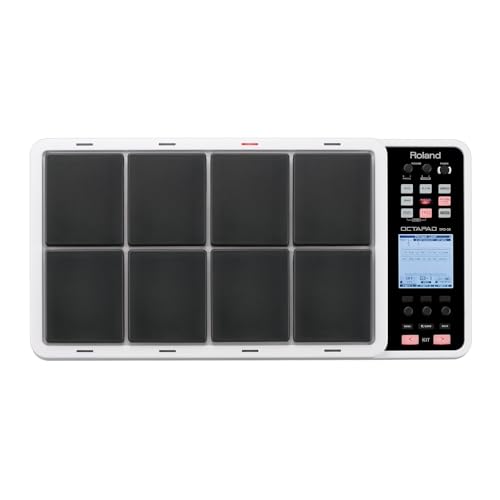
Rugged, road-worthy design

The Yamaha Stage Custom Birch drum set is ideal for those learning to play, for students, for teachers and for working musicians who require a dependable gigging set that adapts to any venue
Cost and Maintenance
Typically, drummers weigh their options carefully when considering the cost and maintenance of electronic versus acoustic drums. For beginners, the cost breakdown often leans towards electronic kits, which range from $300 to $800, encompassing all necessary components. In contrast, acoustic kits, starting around $400 to $700, usually require additional investments for cymbals and hardware, pushing costs higher. Maintenance tips show that electronic drums need minimal upkeep, while acoustic drums require regular drumhead replacements every 6 to 12 months, costing $10 to $30 each. Additionally, acoustic cymbals may need cleaning or replacing, while electronic kits rarely require serious servicing. Overall, each option has its pros and cons, but for beginner drummers, electronic kits may offer more immediate convenience and lower maintenance. This is largely due to reduced maintenance requirements that come with electric drums. Furthermore, the durability and construction quality of electronic drums contributes to their longevity, making them ideal for beginner players.
Recommended Products

NATURAL FEEL: The VAD716 features Roland’s famous multi-ply mesh heads, with three-layer heads on the snare and floor tom and two-layer heads on the rack toms, providing natural stick resistance and rebound that’s customizable for your playing style, even with the natural wood shells and traditional mounts provides an uncannily acoustic feel

4 inputs and 2 channels can be blended to produce an expanded array of authentic vintage tube tones.

7-Ply Maple Shells
Learning Features of Electronic Drums
Electronic drums boast a variety of learning features that make them particularly beneficial for beginners. These kits often include practice tools like metronomes to strengthen timing and rhythm. Many allow users to record and review their sessions, which can be essential for tracking progress. Furthermore, learners can load songs and slow them down, facilitating ear training. Features like play-along tracks and customizable sound presets keep practice engaging! Educational integration is seamless, too: USB and MIDI connectivity enables access to learning software and online lessons. User-friendly interfaces and lesson modes make setup easy, letting players focus on honing skills. Overall, the interactive capabilities of electronic drums provide an exciting platform for beginners to explore music. Additionally, understanding basic drumming concepts like counting 8th notes can enhance rhythm and pattern creation when practicing with electronic kits. For example, using musical rhythms can help improve coordination and timing during play.
Recommended Products

FLAGSHIP SOUND ENGINE: Powered by the V51 module, the Roland 5-Series V-Drum delivers the same advanced drum engine as the top-tier V71 for rich tone, dynamic response, and deep sound customization

synthesizer, sampler, drum machine and sequencer – perform with 12 different synth engines, including a sampler with 20 second sample time, drum machine and sequencer. each synth engine has several presets, with the ability to create your own, as well as their own unique parameters that can be adjusted using the colored knobs.
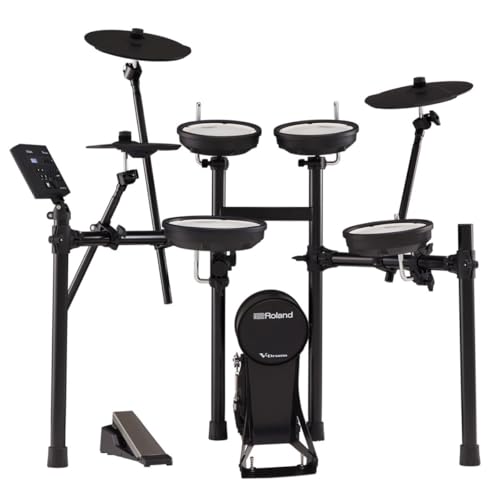
Conveniently compact and ideal for drumming at home, the TD-07KV V-Drums kit delivers the superior expression and playability of high-end V-Drums in a budget-friendly package.
Learning Features of Acoustic Drums
Acoustic drums offer a unique learning experience that many beginners find both rewarding and enjoyable. The immediate physical feedback from striking a real drum head helps build essential stick technique and control. Beginners can truly appreciate the dynamic response of acoustic drums, which varies with their playing intensity, allowing for expressive musicality. The authentic sound of acoustic kits enhances listening skills, encouraging ear training. Additionally, practicing on these drums develops muscle memory for precise control over timing and dynamics. Many resources, like metronomes, practice pads, and instructional materials, are available to support learning. A basic setup includes a bass drum, snare drum, and toms, making it accessible for beginners. Furthermore, the shell material quality of the drums plays a significant role in producing a richer sound, which can greatly influence the overall learning experience. While acoustic kits may be louder and require maintenance, the tangible experience of playing promotes growth and confidence in budding drummers. Happy drumming!
Recommended Products

40 New Preset Kits, 200 User Kits and over 400 New Voices

4-piece Maple Shell Pack with 12" Tom

5-piece Poplar Drum Set with 22" Bass Drum
Making the Right Choice for Beginners
When it comes to choosing between acoustic and electronic drums, how does a beginner make the best decision? First, consider sound quality; acoustic drums offer an authentic feel and rich sound, while electronic kits provide customizable options! Beginners often find the unique sound of acoustic drums more inspiring. Another critical factor is space and noise: electronic drums allow for silent practice with headphones, perfect for confined living spaces or late-night sessions. Additionally, hardware features play a role; electronic kits have less maintenance and include built-in metronomes, appealing to new drummers. To make a wise choice, beginners should weigh these factors carefully, exploring both options to discover which resonates with their personal style and practice needs! Furthermore, the sound created by the vibration of drumheads is an essential aspect of understanding how each type of drum functions. In live settings, the power output ratings of drum monitor speakers can significantly enhance the overall experience for electronic drum users.
Recommended Products

High-Performance Sound Engine - Developed and refined over decades of crafting musical instruments, the DTX-PRO includes 70 premium kits that faithfully recreate the sounds and effects found on authentic acoustic drum sets, professional-grade synthesizers and audio equipment.
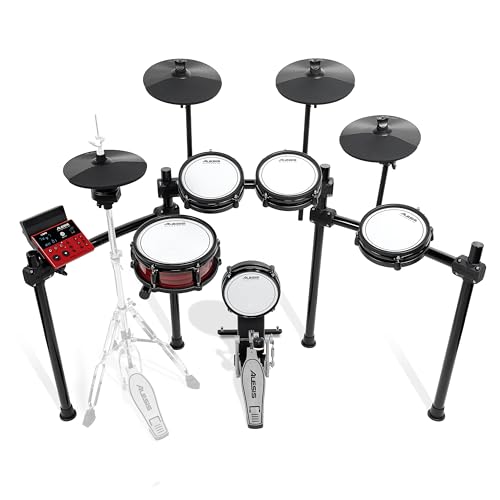
Complete Percussion Experience - Stand-mounted 10" hi-hat controller, 3x dual-zone 10" cymbals with choke, ultra-quiet Alesis mesh heads, upgraded Drum Module with Bluetooth and BFD drum sounds

Powerful Sound Engine - Features 1,100 voices, 100 drum kits, and 50 demo tracks, Donner DED-300 Pro electronic drum set adds a built-in top slot for phone/tablet use. Compatible with the Donner Play app for expanded training and customization.
Frequently Asked Questions
Can Electronic Drums Replicate the Feel of Acoustic Drums?
Fundamentally failing, electronic drums can’t fully replicate the feel of acoustic drums. The tactile experience differs considerably, as the feel comparison highlights acoustic variations in dynamics, stick response, and complex sound feedback, unparalleled in electronic models.
How Do Electronic Drums Connect to Recording Software?
Electronic drums connect to recording software primarily through MIDI connectivity, allowing for seamless integration. Proper software compatibility guarantees the module can transmit MIDI signals, enabling artists to utilize digital audio workstations for sound production effectively.
What Is the Best Electronic Drum Kit for Beginners?
A shimmering array of sounds beckons; the Alesis Nitro Max shines as the best affordable choice for beginners, boasting features like responsive mesh pads and numerous kits, making practice both engaging and accessible.
Are There Specific Genres That Favor Acoustic or Electronic Drums?
Certain genres, such as rock, heavily favor acoustic drums for their authentic sound and dynamic expression. Jazz, influenced by acoustic elements, showcases the genre’s reliance on unamplified projection and rich tonal qualities, enhancing improvisational fluidity in performances.
Can I Upgrade My Electronic Drum Kit in the Future?
Upgrading an electronic drum kit is feasible, offering various upgrade options such as enhanced modules, improved hardware, and additional components. Future enhancements can greatly elevate the playing experience, expanding versatility and sound quality.


