As an Amazon Associate, we earn from qualifying purchases. Some links on this site are affiliate links at no extra cost to you. Our recommendations are based on thorough research and editorial judgment.

10 Best USB Audio Interfaces of 2026 – Top Picks for Every Budget

Looking for the best USB audio interfaces of 2026? You’ve got great options! The Sabrent USB External Stereo Sound Adapter is perfect for gamers and calls on a budget. Musicians might love the XTUGA USB Audio Interface for vocals and instruments. For high-quality sound, check out the Focusrite Scarlett Solo 3rd Gen. The Mackie Onyx Producer 2X2 offers superb monitoring. Whether you’re recording or streaming, there’s something for everyone! Keep reading to find the perfect match for your needs!
Key Takeaways
- The best USB audio interfaces for 2026 cater to diverse budgets and needs, from beginners to professionals in music and content creation.
- Models like the Focusrite Scarlett Solo and PreSonus AudioBox 96 deliver high-quality sound at affordable prices, perfect for aspiring musicians.
- The compact designs of interfaces such as the Sabrent and MAONO PS22 Lite are ideal for on-the-go use without sacrificing audio quality.
- Look for interfaces offering ASIO driver support, low latency monitoring, and bundled DAW software to enhance recording experiences.
- Each recommended device balances portability and robust features, making them suitable for varying recording environments and user preferences.
Sabrent USB External Stereo Sound Adapter (AU-MMSA)
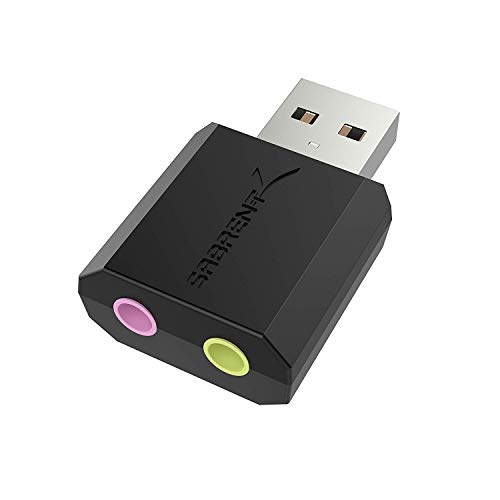
SABRENT USB External Stereo Sound Adapter for Windows and Mac. Plug and Play No Drivers Needed...
- Connectors: USB Type-A, Stereo output jack, Mono microphone-input jack.
- Driverless for Windows 98SE/ME/2000/XP/Server 2003/Vista/7/8/Linux/Mac OSX.
- USB bus-powered, no external power required.
If you’re looking for an easy way to upgrade your audio experience on both Windows and Mac, check out the Sabrent USB External Stereo Sound Adapter (AU-MMSA)! This handy little device connects via USB Type-A and offers both stereo output and a mono microphone input. You’ll love its driverless operation, which means you can start using it right out of the box—no software installations required! Plus, it’s powered by your USB port, so there’s no extra power adapter needed. Whether you’re gaming, zooming, or streaming music, this adapter makes your audio crisp and clear. It’s a smart choice!
Best For: Those seeking an affordable and easy-to-use audio upgrade for both gaming and communication on Windows and Mac devices.
Pros:
- Driverless operation allows for effortless plug-and-play setup.
- Compact and lightweight design makes it portable and easy to use on-the-go.
- USB bus-powered, eliminating the need for an external power supply.
Cons:
- Limited to stereo output and mono input, which may not suffice for advanced audio setups.
- May not support higher-end audio processing capabilities compared to dedicated sound cards.
- Build quality may feel less robust compared to more expensive audio solutions.
XTUGA USB Audio Interface for PC

XTUGA USB Audio Interface for PC,Interface for Recording Music Computer Recording Audio Interface...
- [Reliable Dual Inputs for Daily Use] This Q-12 audio interface provides professional 16-Bit/48kHz resolution for pristine sound. Unlike others with popping noise, our...
- [48V Phantom Power & Zero Latency] Capable of driving condenser mics with switchable 48V power. Say goodbye to high latency; this xlr interface features fast transmission...
- [Plug and Play] Functioning as a stable audio interface for PC via USB connection. Powered directly from your computer, no external adapter needed. Simply plug in and...
Looking to plunge into music recording? The XTUGA USB Audio Interface for PC is a fantastic choice for your musical adventure! With a front panel microphone preamp and a 3-pin XLR socket, you can easily connect vocal mics or instruments like guitars and bass. It supports high-quality recordings, reaching up to 16-bit/48 kHz, giving your tracks a clear and polished sound. You’ll also appreciate the independent volume controls and signal monitoring, ensuring you capture the best audio without any surprises. Plus, the built-in +48V phantom power makes everything run smoothly, perfect for both newbies and pros alike!
Best For: Musicians, podcasters, and recording enthusiasts looking for a versatile and high-quality USB audio interface for home studio setups.
Pros:
- High-Quality Audio: Supports up to 16-bit/48 kHz recording, ensuring studio-level sound clarity.
- Easy Connectivity: Front panel microphone preamp with XLR and additional 3.5mm mic jack for versatile input options.
- User-Friendly Controls: Independent volume control and gain monitoring for optimal recording levels.
Cons:
- Requires External Power: Needs +48V phantom power for certain microphones, which may not be available in all environments.
- Limited to 2 Channels: Might not accommodate larger setups needing multiple inputs simultaneously.
- Potential Learning Curve: Beginners may require time to familiarize themselves with the software and interface controls.
PreSonus AudioBox 96 USB Audio Interface
Sale

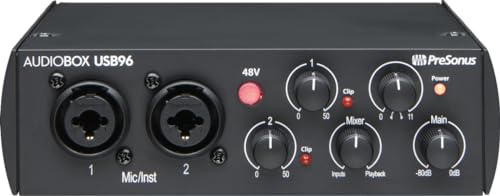
PreSonus AudioBox 96 25th Anniversary USB Audio Interface
- Value-packed 2-channel USB 2.0 interface for personal and portable recording.
- 2 high-quality Class-A mic preamps make it easy to get a great sound.
- 2 high-headroom instrument inputs to record guitar, bass, and your favorite line-level devices, plus MIDI I/O.

The PreSonus AudioBox 96 USB Audio Interface is perfect for aspiring musicians and podcasters who want high-quality sound without breaking the bank! With two excellent Class-A mic preamps and support for 24-bit/96 kHz recording, you’ll capture every detail of your performance. Plus, it comes with a fantastic software bundle, including Studio One Artist and Ableton Live Lite, valued at over $1000! You’ll love the zero-latency monitoring feature that lets you mix inputs and playback effortlessly. Its USB bus-powered design means you can take it anywhere. If you’re looking for a reliable and portable interface, the AudioBox 96 is a great choice!
Best For: Aspiring musicians and podcasters seeking high-quality sound and portability without a hefty price tag.
Pros:
- High sound quality with 2 Class-A mic preamps and 24-bit/96 kHz recording capability.
- Comprehensive software bundle including Studio One Artist and Ableton Live Lite worth over $1000.
- Portable and convenient USB bus-powered design allows for easy mobility.
Cons:
- Limited to only 2 channels, which may not be sufficient for larger recording setups.
- No built-in effects or processing, requiring additional software or plugins for expanded functionality.
- MIDI I/O may be seen as an additional feature, but some users may find it unnecessary if not utilizing MIDI instruments.
UGREEN USB to Audio Jack Sound Card Adapter
Sale


UGREEN USB to Audio Jack Sound Card Adapter with Dual TRS 3-Pole 3.5mm Headphone and Microphone USB...
- Upgrade the Sound Quality: UGREEN Aux to USB adapter is the perfect solution for upgrading the sound quality of your laptop or desktop computer. With its high-resolution...
- Crystal-Clear Sound: Experience high-fidelity audio like never before! With a built-in DAC chip, this USB audio adapter delivers rich and immersive audio. The USB Aux...
- Plug and Play: Simply connect this sound card to your device and you're ready to go - no drivers or external power sources required. Whether you're using it for gaming...
Searching for a budget-friendly way to elevate your audio experiences? The UGREEN USB to Audio Jack Sound Card Adapter is a solid choice! This compact external converter connects effortlessly to devices like Windows, Mac, and even gaming consoles. With its high-resolution DAC chip, you’ll enjoy crisp sound up to 16bit/48kHz, making games and music more immersive. Plus, it’s super portable—you won’t even notice you’ve got it in your bag! Just plug it in, and you’re ready for a crystal-clear audio journey. No fancy drivers needed! It’s no surprise it’s a best-seller with a solid 4.4-star rating!
Best For: Those seeking an affordable and portable solution for high-quality audio on a variety of devices including computers and gaming consoles.
Pros:
- High-resolution DAC chip provides clear audio up to 16bit/48kHz, enhancing your listening experience.
- Plug and Play design eliminates the need for drivers or external power, making it user-friendly.
- Lightweight and compact, making it easy to carry in your bag for on-the-go use.
Cons:
- Limited compatibility as it does not work with PS3 devices.
- Lacks advanced features found in higher-end audio converters.
- Some users may prefer a built-in sound card over an external adapter.
2i2 USB-C Audio Interface for PC/Mac Recording
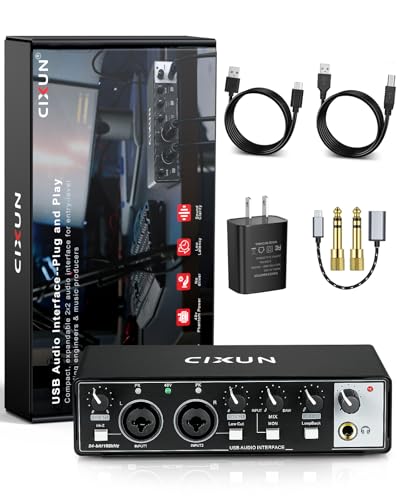
CIXUN 2x2 USB-C Audio Interface for PC/Mac Recording, 24-bit/192kHz, Dual TS/XLR Inputs, +48V...
- 【Plug and Play/High-quality Shell】 USB Audio Interface for PC and Mac No drivers, no complicated software—just plug in via USB and start creating. This versatile...
- 【48V Phantom Power for Microphone】 Studio-Grade Sound in a Compact Interface Experience professional 24-bit/192kHz audio quality with transparent preamps and...
- 【User-friendly Design] An intuitive control interface to streamline your recording workflow. Designed specifically for musicians, this audio interface features...
For anyone diving into the world of audio recording, the 2i2 USB-C Audio Interface stands out as a fantastic choice! With 24-bit/192kHz audio quality, you’ll capture studio-grade sound effortlessly. Its dual TS/XLR inputs and +48V phantom power make it perfect for recording vocals and instruments. Plus, its compact design is durable and easy to take anywhere. You won’t need complicated software, just plug it in and start recording! The included USB cables, wall charger, and jack cables mean you’re all set. Rated 5.0 stars by users, the 2i2 is ideal for both beginners and experienced pros. Enjoy recording today!
Best For: The 2i2 USB-C Audio Interface is best for both beginners and experienced audio recording professionals looking for a high-quality, easy-to-use interface.
Pros:
- Studio-grade sound with 24-bit/192kHz audio quality for excellent recordings.
- Plug-and-play functionality with no drivers required, making it user-friendly.
- Versatile connectivity with dual TS/XLR inputs and phantom power for vocal and instrument recording.
Cons:
- Requires an external power source to power on the unit, which may limit portability.
- Limited to two inputs, which may not suffice for larger recording setups.
- Does not include software, so users might need to obtain their own recording software separately.
BOMGE Mini 2 Channel USB Audio Interface for Recording and Podcasting

BOMGE mini 2 Channel USB Audio Interface for Recording, Streaming and Podcasting, with XLR/48V...
- USB Audio Interface: Podcast, Record, Live Stream, This Portable Audio Interface Covers it All – USB sound card for Mac or PC delivers 48 kHz audio resolution for...
- 2 in/2 out and connect more devices: The portable audio interface has 2 jacks: 2 combo XLR/MIC/LINE inputs with phantom power for recording guitar, vocals or line-in...
- 48V Phantom Power: For reliable power, the stage audio mixer is equipped with +48V phantom power. With ultra-low noise design. Suitable for beginners and studio...
Looking for a compact audio interface that packs a punch? The BOMGE Mini 2 Channel USB Audio Interface is perfect for you! Weighing just 11.3 ounces and fitting snugly on your desk, it’s great for recording, streaming, or podcasting. With studio-quality audio at 48 kHz, it features two combo XLR/MIC/LINE inputs that support phantom power for condenser mics. You’ll enjoy real-time monitoring with its headphone output and stereo outputs. Plus, it connects easily—no drivers needed for Mac or Windows! With positive user ratings and a convenient size, you won’t want to miss this handy tool for your audio projects!
Best For: Those seeking a compact and user-friendly audio interface for recording, streaming, and podcasting with high-quality sound.
Pros:
- Studio-quality audio with 48 kHz resolution for professional recording.
- Easy plug-and-play setup with no drivers required for most operating systems.
- Lightweight and compact design makes it ideal for portable use.
Cons:
- Limited to two input/output channels, which may not suit larger setups.
- Some users report issues with low direct monitoring volume.
- Customer reviews indicate a mixed experience regarding long-term durability.
MAONO USB Audio Interface for PC (PS22 Lite Black)
Sale

MAONO PS22 Lite USB Audio Interface for PC: Interface with XLR Input 24-bit/192kHz Routing Software...
- Capture every detail of your sound: Imagine the perfect take, every note and beat, captured as if by magic. That's the MAONO PS22 Lite audio interface—designed for the...
- For Microphone Lovers: Podcasters and Voice Actors, the PS22 Lite XLR audio interface is perfect. It can handle condenser and dynamic microphones with up to 56 dB of...
- Create Your Music with Guitar: Whether you are a musician or a guitar enthusiast, an interface for recording music gives you rich, realistic sound. Plug into the audio...
The MAONO USB Audio Interface PS22 Lite is a fantastic option for anyone venturing into the world of audio creation. With a 24-bit/192kHz resolution, it captures every detail of your sound! You can connect condenser and dynamic microphones easily, thanks to its preamp and phantom power. It’s perfect for podcasters, streamers, and musicians alike. You’ll love the dedicated instrument input for guitars, too. Plus, the ProStudio Routing Software makes streaming a breeze, letting you add virtual channels for professional touch. It’s compatible with PC, Mac, and popular DAW software, so you can create without limits. Engage and start your audio journey!
Best For: The MAONO USB Audio Interface PS22 Lite is best for podcasters, streamers, and musicians looking for an affordable and high-quality audio recording solution.
Pros:
- High-resolution audio with 24-bit/192kHz, capturing detailed sound.
- User-friendly design with plug-and-play functionality, perfect for beginners.
- Versatile compatibility with both PC and Mac as well as popular DAW software.
Cons:
- No built-in effects, requiring the use of DAW software VST plug-ins for sound enhancement.
- Limited by USB power, which may affect performance with certain setups.
- Basic features may not satisfy advanced users looking for more complex options.
Focusrite Scarlett Solo 3rd Gen USB Audio Interface
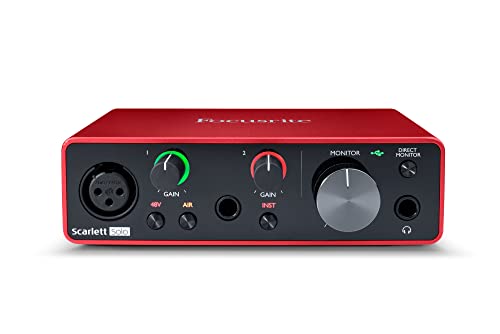
Focusrite Scarlett Solo 3rd Gen USB Audio Interface for Guitarists, Vocalists, Podcasters or...
- Pro performance with great pre-amps - Achieve a brighter recording thanks to the high performing mic pre-amps of the Scarlett 3rd Gen. A switchable Air mode will add...
- Get the perfect guitar and vocal take with - With two high-headroom instrument inputs to plug in your guitar or bass so that they shine through. Capture your voice and...
- Studio quality recording for your music & podcasts - Achieve pro sounding recordings with Scarlett 3rd Gen’s high-performance converters enabling you to record and mix...
Ready to take your music to the next level? The Focusrite Scarlett Solo 3rd Gen USB Audio Interface is perfect for guitarists, vocalists, and podcasters. With high-performance mic preamps, your recordings will shine! The switchable Air mode adds clarity, making acoustic instruments pop. You’ve got two instrument inputs for guitars or bass, so you can easily connect and create. Plus, recording at 24-bit/192kHz keeps your sound professional and polished. It even comes with Pro Tools Intro+, Ableton Live Lite, and six months of FL Studio! With a three-year warranty, you can focus on making music without worries!
Best For: The Focusrite Scarlett Solo 3rd Gen USB Audio Interface is best for musicians, podcasters, and producers looking for high-quality recording solutions.
Pros:
- High-performance mic preamps enhance recording clarity and brightness.
- Supports professional-grade recording quality with up to 24-bit/192kHz.
- Includes a suite of software tools for immediate music creation and production.
Cons:
- Limited to a single mic input, which may not be suitable for larger recording setups.
- Some included software may have a learning curve for beginners.
- The interface may require additional powered USB hubs for extensive setups.
Mackie Onyx Producer 2X2 USB Audio Interface

Mackie Audio Interface, Onyx Producer 2X2 USB Audio Interface with MIDI (Onyx Producer 2-2)
- High-resolution 2 in x 2 out 24-Bit/192kHz recording plus MIDI I/O with The Musician Collection of 23 plugins and instruments
- Two boutique-quality Onyx mic preamps with class-leading fidelity and dynamic range with 48v Phantom Power for use with studio condenser mics
- XLR/TRS combo inputs accept mic, line and Hi-Z instrument level sources
For aspiring musicians and podcasters seeking a reliable and user-friendly audio interface, the Mackie Onyx Producer 2X2 stands out as an excellent choice! With 24-Bit/192kHz resolution, it delivers stunning audio quality. You’ll love the two boutique-quality Onyx mic preamps that offer superb fidelity. Plus, the zero-latency direct monitoring means you can hear yourself in real time without delays! Need portability? This rugged design is built to withstand life on the go. USB 2.0 connectivity keeps everything fast and smooth, while the included Musician Collection provides you with 23 plugins and instruments to elevate your recordings. Give it a try!
Best For: Aspiring musicians and podcasters looking for a reliable, portable audio interface that delivers high-quality sound.
Pros:
- Exceptional 24-Bit/192kHz audio resolution for outstanding sound quality.
- Rugged, durable design suitable for mobile recording and transport.
- Includes 23 plugins and instruments from the Musician Collection to enhance recordings.
Cons:
- Limited to 2 inputs and 2 outputs, which may not be sufficient for larger setups.
- USB 2.0 connectivity may have slower transfer speeds compared to newer USB standards.
- No standalone power option, reliant on bus power which may limit flexibility in certain setups.
M-AUDIO M-Track Solo USB Audio Interface for Recording and Streaming
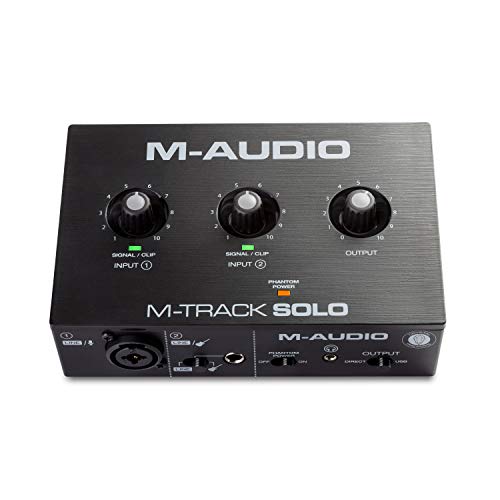
M-AUDIO M-Track Solo USB Audio Interface for Recording, Streaming and Podcasting with XLR, Line and...
- Podcast, Record, Live Stream, This Portable Audio Interface Covers it All - USB sound card for Mac or PC delivers 48kHz audio resolution for pristine recording every time
- Be ready for anything with this versatile M-AUDIO interface - Record guitar, vocals or line input signals with one combo XLR / Line Input with phantom power and one Line...
- Everything you Demand from an Audio Interface for Fuss-Free Monitoring - 1/8" headphone output and stereo RCA outputs for total monitoring flexibility; USB/Direct switch...
If you’re looking for an easy-to-use USB audio interface that’s perfect for recording, streaming, or podcasting, the M-AUDIO M-Track Solo might just be your best bet! This compact interface supports XLR and line inputs, giving you flexibility for different setups. With 48 kHz audio resolution, your recordings will sound crisp and professional. Plus, it’s USB powered, so you won’t need extra outlets! You can monitor effortlessly with the headphone output and enjoy zero-latency monitoring. It even comes with MPC Beats Software, making it a great choice for music production. It’s lightweight, portable, and user-friendly—ideal for any creator!
Best For: Creators seeking a portable, easy-to-use audio interface for recording, streaming, or podcasting.
Pros:
- USB powered for easy connectivity without needing an external power supply.
- Compact design allows for convenient portability and setup anywhere.
- Includes software for music production, enhancing versatility for users.
Cons:
- Limited to 48 kHz audio resolution, which may not satisfy professional recording standards.
- Only provides 2-channel recording, which could be restrictive for more complex projects.
- Some users may prefer additional features or higher-end models for advanced needs.
Factors to Consider When Choosing an Audio Interface USB
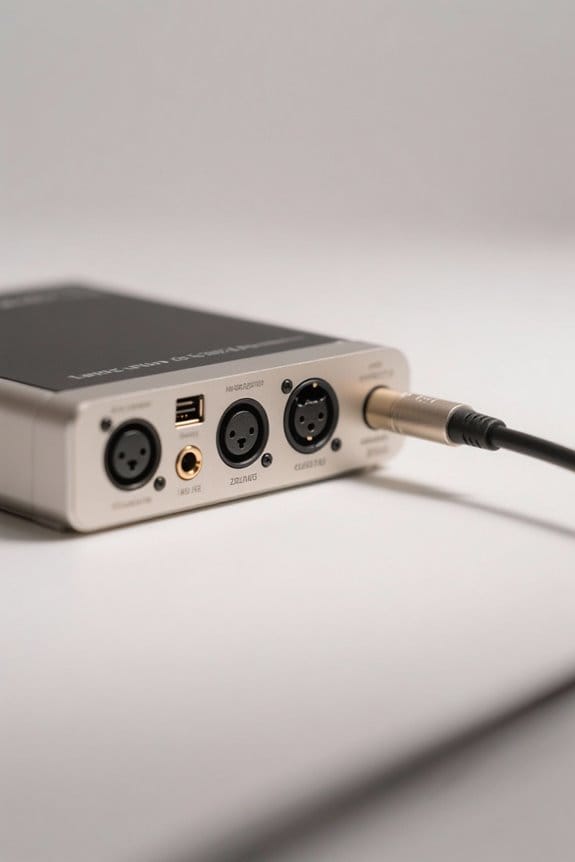
When you’re picking a USB audio interface, you’ll want to think about several key factors. First, consider audio quality standards to guarantee your recordings sound great. Then, check out connectivity options, power requirements, and portability—especially if you’re on the go!
Audio Quality Standards
Choosing an audio interface isn’t just about plugging it in and hoping for the best! You want excellent audio quality, and that’s where standards come into play. Look for interfaces that support high recording resolutions, like 24-bit/192kHz, for detailed sound. Class-A mic preamps are your best friends, enhancing brightness and clarity for a professional touch. Don’t forget about phantom power—especially if you’re using condenser mics! Higher sampling rates lead to lower latency, allowing you to capture clear tracks without annoying delays. Plus, having zero-latency monitoring means you can hear yourself live without any hiccups! When you consider these audio quality standards, you’ll be on your way to creating great recordings. Let’s make some music!
Connectivity Options Available
While exploring connectivity options for your USB audio interface, it’s essential to contemplate how you’ll be using it. Look for multiple inputs, like XLR for microphones or line-level inputs for instruments. This versatility allows you to connect various audio sources seamlessly. You’ll also want to check for USB Type-A or USB-C, making certain it works with your devices. Some interfaces even have extra outputs for studio monitors or headphones, helping you monitor your sound in real-time! If you’re using condenser microphones, phantom power is a must. Finally, zero-latency monitoring guarantees you hear everything without annoying delays. All these features keep your recording and streaming smooth, so you can focus on what you love—creating great music!
Power Source Requirement
Power source requirements can make a big difference in how effectively you use your USB audio interface! Usually, there are two main types: USB bus-powered interfaces and those needing external power. USB bus-powered interfaces draw energy straight from your computer, making them super convenient for recording on the go! Some even offer both options, giving you more stability during demanding sessions. If you plan to set up a permanent studio, an interface that requires an external power source could be the way to go. Additionally, battery-operated interfaces are perfect if you’re recording in places without outlets. Always think about where you’ll be using your interface, and choose the best power option for your needs!
Portability and Size
When you’re on the lookout for a USB audio interface, size and portability should definitely be on your radar! If you plan to record on the go, choose lightweight and compact models. Many are USB bus-powered, so you won’t need bulky external power supplies. Look for interfaces that measure around 5 to 10 inches and weigh under 2 pounds; they fit perfectly in your laptop bag! A rugged build is also important—it’ll help your device handle travel wear and tear. Plus, some interfaces come with handy accessories, like cables and adapters, specifically designed for mobile use. This means less stuff for you to carry! Consider these factors, and you’ll have a reliable, portable audio companion!
Software Compatibility Features
Choosing the right USB audio interface can really enhance your recording experience! Start by making sure it’s compatible with your operating system—Windows, Mac, or Linux. This is essential for smooth driver installations. Also, look for interfaces that bundle popular digital audio workstation (DAW) software; this lets you jump into recording immediately! Don’t forget to check for ASIO driver support, as these help reduce latency and improve performance. Plus, interfaces that include a range of virtual instruments and effects plugins can really spice up your music production. Finally, consider options with routing software, providing virtual channels and loopback features. These make your live streaming and complex audio setups a breeze. Happy recording!
Input/Output Channels Count
Great software compatibility sets the stage for your recording success, but choosing the right input/output channels is just as important! The number of input channels defines how many audio sources you can record at once. If you’re collaborating or playing in a band, you’ll need more than one or two inputs. Output channels offer flexibility, letting you route audio to headphones, monitors, or other devices. For home use, a simple interface with 1-2 inputs may suffice, but pros often need 8 or more. Look for interfaces with XLR and line-level inputs to connect microphones and instruments simultaneously. Plus, models with MIDI I/O expand connectivity, making it easier to integrate synthesizers and controllers into your setup!
Monitoring Capabilities Included
Monitoring capabilities in your audio interface can make a world of difference, especially during recording sessions! You want real-time audio feedback, so look for features that minimize latency. Many interfaces offer dedicated headphone outputs and a USB/Direct switch, allowing you to balance direct inputs and playback sounds easily. Independent volume knobs for headphones and main outputs give you precise control over your monitoring levels. This is vital for accurate mixes! Plus, direct monitoring helps you avoid annoying signal delays, letting musicians and podcasters adjust in real-time. Also, multiple output options, like stereo RCA and 1/4” headphone jacks, enhance your setup for studio monitors and headphones. This way, you’ll always be ready to produce your best work!
Build Quality and Durability
When it comes to selecting an audio interface, build quality and durability can really make a difference! A sturdy interface is key, especially for you mobile recorders out there. Look for metal shells that give a “built-like-a-tank” feel. These rugged casings hold up beautifully under stress. While those lightweight options might be tempting for portability, they can sometimes lack strength. Check for protective features like reinforced connections and dust-resistant designs, as they can extend your device’s life. Solid-state constructions usually outshine plastic, offering better shock resistance and environmental durability. You want an interface that can handle your creative adventures, so prioritize quality—trust me, it’ll pay off in the long run!
Frequently Asked Questions
What Are the Benefits of Using a USB Audio Interface?
Using a USB audio interface can really elevate your sound quality! It connects your microphone or instrument directly to your computer, giving you clearer recordings. You’ll enjoy lower latency, which means your audio plays back almost instantly without delays. Plus, many interfaces offer various inputs and outputs, letting you mix different sound sources easily. Whether you’re recording music, podcasts, or voiceovers, an interface helps you achieve professional-sounding results. It’s a smart investment for any creative!
How Do I Connect a USB Audio Interface to My Computer?
To connect a USB audio interface to your computer, start by plugging the USB cable from the interface into an available USB port. Next, make sure you install any required drivers; many interfaces come with software included! Once that’s done, open your music software, and select the interface as your input and output device. Voila! You’re ready to record or mix! It’s that easy, and you’ll be creating amazing sound in no time!
Can I Use a USB Audio Interface With My Gaming Console?
Yes, you can use a USB audio interface with your gaming console! Many consoles, like the PlayStation and Xbox, support USB connections. Just plug the interface into a USB port, and connect your microphone or instruments. It’ll enhance your game audio, making it clearer and more engaging. Just double-check compatibility first, as some devices might work better than others. It’s an easy upgrade for a better gaming experience! Enjoy your gaming sessions!
Do I Need Special Drivers for Different USB Audio Interfaces?
You might need special drivers for different USB audio interfaces, but don’t worry! Most modern devices work straight out of the box. For instance, brands like Focusrite and PreSonus usually provide user-friendly software on their websites. If you’re using older models, check the manufacturer’s site to download drivers; it’s like finding your favorite lost treasure! Overall, installing drivers is often quick and easy, helping you get right to your audio adventures!
What Is the Difference Between USB 2.0 and USB 3.0 Audio Interfaces?
The main difference between USB 2.0 and USB 3.0 audio interfaces is speed! USB 3.0 offers faster data transfer rates, which can reduce latency during recording and playback. This means that your audio sounds clearer and more responsive. If you’re working with high-quality audio or multiple tracks, USB 3.0 can make a noticeable difference. Overall, for most users, USB 2.0 is sufficient, but USB 3.0 gives you that extra boost when you need it!


