As an Amazon Associate, we earn from qualifying purchases. Some links on this site are affiliate links at no extra cost to you. Our recommendations are based on thorough research and editorial judgment.


3 Best Studio Monitors for Small Rooms: Perfect Picks for Quality Sound

When setting up your small room for music or production, the Edifier MR5, Mackie CR3.5, and Edifier MR4 are excellent choices! The MR5 offers a powerful 5″ woofer, while the CR3.5 has versatile connectivity. The MR4 strikes a balance between casual listening and studio quality. Plus, they all have features like tone knobs for personalized sound. You’ll enjoy crisp audio without bulky equipment. Keep going, and you’ll discover more tips on how to choose the perfect monitors!
Key Takeaways
- Look for compact designs like the Edifier MR5 or MR4, which are ideal for small room setups without sacrificing sound quality.
- Ensure studio monitors have a frequency response that suits your room size; options like Edifier’s range from 46Hz to 40kHz.
- Consider monitors with user-friendly sound adjustment features, such as tone knobs and dual modes for versatile use in small spaces.
- Prioritize models with sturdy build quality (like MDF wood) and power output of 50 to 110 Watts RMS for sufficient volume in smaller environments.
- Evaluate connectivity options; having multiple inputs like RCA and TRS ensures compatibility with different audio sources and setups.
Edifier MR5 2.0 Studio Monitor Bookshelf Speakers
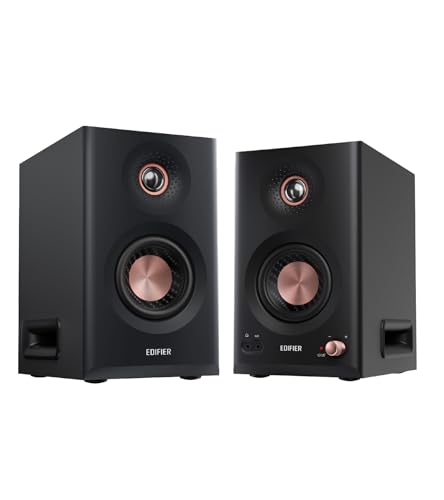
Edifier MR5 2.0 Studio Monitor Bookshelf Speakers, 110W(RMS), Hi-Res Audio, Bluetooth 6.0, 3-Way...
- Studio-Grade Sound: 3-way active crossover system with 5" long-throw woofer, 3.75" mid driver, and 1" silk dome tweeter for accurate, detailed audio reproduction...
- Hi-Res Audio: Supports 24-bit/96kHz wired and wireless (LDAC) audio for crystal-clear, high-resolution sound.
- Room Acoustic Tuning: Tailor the sound to your space using physical rear knobs for High/Low Frequeney adjustments or the EDIFIER ConneX App for advanced room compensation...
If you’re looking for studio monitors that fit perfectly in small rooms without sacrificing sound quality, the Edifier MR5 2.0 Studio Monitor Bookshelf Speakers are a fantastic choice! These monitors feature a 3-way active crossover system, ensuring you get rich audio with a 5″ woofer, 3.75″ mid-driver, and 1″ tweeter. With a frequency range of 46Hz to 40kHz, your music will sound incredible! Tuning adjustments are easy, thanks to physical knobs and the EDIFIER ConneX App. Plus, Bluetooth connectivity lets you stream effortlessly. The compact design and solid build make them ideal for home studios. Enjoy high-quality sound!
Best For: Those seeking high-quality audio performance in a compact design for home studio use or small rooms.
Pros:
- High-resolution audio support for an enhanced listening experience with 24-bit/96kHz capabilities.
- Flexible connectivity options including Bluetooth 6.0, XLR, TRS, RCA, and AUX for versatile setup.
- Room acoustic tuning features that allow customization for optimal sound quality.
Cons:
- Limited low-frequency response may not satisfy bass enthusiasts seeking deeper tones.
- Rear placement of tuning knobs can make adjustments less convenient in tight spaces.
- No built-in microphone input, limiting some recording possibilities directly through the monitors.
Mackie CR3.5 Creative Reference Powered Studio Monitors

Mackie CR3.5 3.5" Creative Reference Powered Studio Monitors with Tone Knob and Location Switch...
- Mackie CR3.5 Creative Reference Powered Studio Monitors combine studio-quality sound with a tone control, making CR3.5 the best studio monitors, gaming speakers and party...
- Connect CR3.5 to just about anything. Hook up audio interfaces and playback devices with TRS and RCA connectors. Play gaming consoles and PCs with the 3.5 mm input...
- Use the tone knob to shape the sound, starting with the transparent response you expect from studio monitors. Turn the knob to gradually boost the bass and add high-end...

Mackie CR3.5 Creative Reference Powered Studio Monitors are an excellent choice for anyone looking to elevate their sound experience without taking up too much space! Perfect for music production, gaming, or just enjoying your favorite tunes, these monitors deliver superb studio-quality sound. With TRS and RCA connectors, you can easily connect them to various devices, plus a 3.5 mm input for your gaming console. The tone knob lets you tweak the sound to your liking, while the location switch optimizes placement. With a silk dome tweeter and woven woofer, you’ll enjoy clear sound and powerful bass—just what you need!
Best For: Those seeking compact studio monitors for music production, gaming, or casual listening that deliver high-quality sound without occupying much space.
Pros:
- Studio-quality sound with a silk dome tweeter and woven woofer for clear audio and impactful bass.
- Versatile connectivity options including TRS, RCA, and 3.5 mm inputs for multiple devices.
- Tone control and location optimization features enhance sound customization based on the listening environment.
Cons:
- May require a subwoofer (CR8SBT) for deep bass enthusiasts as the built-in woofer provides limited low-end.
- Size may be too small for larger rooms or studio settings where more powerful monitors are needed.
- The tone knob might not satisfy those looking for precise EQ adjustments for professional mixing.
Edifier MR4 Powered Studio Monitor Speakers (Pair)
Sale

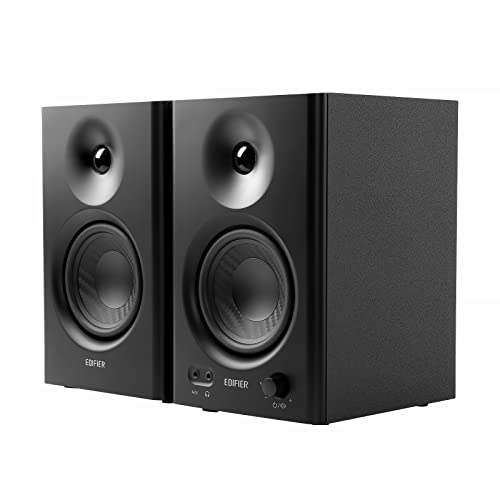
Edifier MR4 Powered Studio Monitor Speakers, 4" Active Near-Field Reference Speaker - Black (Pair)
- TRUE STUDIO MONITOR - Based on the highly rated Edifier bookshelf speakers professionally tuned to a responsive almost flat curve for artists and music creators.
- STUDIO QUALITY SOUND - The 1" silk dome tweeter and 4" composite woofer produce clear, smooth, and overall sound. MDF wood texture helps reduce resonance and reveal true...
- FLEXIBLE CONNECTORS - 1/4" balanced TRS input, an unbalanced RCA input, an unbalanced AUX input and a front headphone output are equipped for connecting devices such as...
The Edifier MR4 Powered Studio Monitor Speakers are a fantastic choice for anyone serious about music production or casual listening in small spaces! With a 4″ composite woofer and a 1″ silk dome tweeter, these monitors deliver clear and smooth sound. Plus, their almost flat curve means you’ll hear true studio quality! They come with flexible connectivity options, including TRS and RCA inputs, making them compatible with your favorite devices. You’ll love the dual mode design, too, for switching between production and casual listening. At a reasonable weight and sleek design, they’re perfect for your setup!
Best For: The Edifier MR4 Powered Studio Monitor Speakers are best for professional music producers and casual listeners looking for high-quality sound in small spaces.
Pros:
- True studio monitor with a professionally tuned almost flat curve for accurate sound delivery.
- Flexible connectivity options including TRS, RCA, and AUX inputs for compatibility with various devices.
- User-friendly controls featuring adjustable high and low frequencies for tailored sound experiences.
Cons:
- Limited bass response due to the 4″ woofer size, which may not satisfy all audiophiles.
- Corded electric power source may restrict placement options compared to battery-operated speakers.
- Weight of 4500 grams might make them less portable for those who need to move them frequently.
Factors to Consider When Choosing Studio Monitors Small Room

When you’re picking studio monitors for your small room, think about a few key factors. Room size matters—smaller speakers often work better without overwhelming your space! Plus, check frequency response, connectivity options, sound adjustment features, and overall build quality to guarantee you get the best fit for your creative setup.
Room Size Considerations
Choosing the right studio monitors for your small room can make all the difference in your sound experience! First, look for monitors with a compact design; they’ll fit nicely without taking up too much space. Consider a frequency response range tailored to your room size, ideally between 46Hz and 40kHz, so you get clear sound. Monitors with adjustable acoustic tuning are great too, as they can reduce unwanted reflections and improve clarity. Don’t forget the power output; lower wattage is often enough for smaller spaces—you don’t want to blast your ears! Finally, choose monitors that support near-field listening, ensuring you hear balanced sound even when seated closely. Happy listening!
Frequency Response Range
Finding the right frequency response range is key to getting the most out of your studio monitors, especially in a small room! The frequency response indicates how well monitors reproduce sound, which is essential for clear audio playback. Look for a wider range, say 46Hz to 40kHz, to catch both deep bass and high notes. This is especially important if you’re into genres like electronic music or hip-hop that need that thumping bass. Also, guarantee good mid-range representation, around 250Hz to 2kHz, for crisp vocals and instruments. Matching your monitors’ frequency response to your listening needs will help you avoid muddiness or harshness, keeping your mixes sounding smooth in any environment. Happy mixing!
Connectivity Options Available
Connectivity plays an essential role in selecting the right studio monitors for small rooms! You’ll want to look for monitors with various options like XLR, TRS, RCA, and AUX inputs. These guarantee you can connect to many audio sources easily. If you enjoy convenience, consider Bluetooth-capable models for seamless wireless streaming, especially from your phone or laptop. Some monitors even offer headphone outputs for private monitoring—super handy in cozy spots! Plus, multi-point connection abilities let you link multiple devices at once, providing flexibility while you work. Just remember, having accessible sound adjustment features can help, but we’ll cover those later! For now, focus on connectivity to keep your setup versatile and efficient!
Sound Adjustment Features
When it comes to studio monitors, sound adjustment features are game changers for small rooms! They let you customize the sound to fit your style. For example, tone knobs let you boost bass or treble, making every track pop just right. Some monitors even offer dual modes—monitor mode for precise production and music mode for casual enjoyment! You’ll love room acoustic tuning features, which help adapt sound to your space. Plus, acoustic space presets make a big difference by fine-tuning the audio based on speaker placement. With intuitive controls, you can easily adjust settings to match your listening needs. Investing in these features can really enhance your overall audio experience! Happy listening!
Build Quality and Design
Choosing studio monitors for small rooms can be a bit tricky, but focusing on build quality and design makes it a lot easier! First, look for monitors made from sturdy materials like MDF wood; this helps reduce distortion and keeps sound clear. Pro-grade features, like dimpled tweeter waveguides, guarantee great sound quality, no matter where you sit. Design matters too! Opt for compact models that fit nicely on your desk without being too overpowering. Pay attention to user-friendly controls; front-panel knobs and acoustic adjustments make setup a breeze. Finally, consider their weight and size; heavier models usually mean better build quality, while size will affect where you can place them. Happy hunting for those perfect monitors!
Power Output Capabilities
Power output capabilities are essential when selecting studio monitors, especially for smaller rooms. You’ll want monitors with a power output of 50 to 110 Watts RMS. This range offers enough volume without overwhelming your space. Look for models that can achieve around 100 dB in peak sound pressure levels for close listening. It’s also smart to choose studio monitors with Class D amplifiers, as they’re efficient and generate less heat while still providing clear sound. This helps prevent distortion, which is vital for mixing and production. When you select the right power output, you not only enhance sound quality, but also create a more enjoyable and productive workspace in your compact studio. Get ready to mix like a pro!
Frequently Asked Questions
Can I Use Studio Monitors Without an Audio Interface?
Yes, you can use studio monitors without an audio interface! You can connect them directly to your computer via a 1/4-inch jack or RCA cables. If you have a headphone output, you might need a cable that converts to the right plug. Just make sure your computer’s sound settings are adjusted. You’ll still enjoy great sound, but an audio interface can enhance clarity and control—something to take into account down the road!
What’s the Ideal Distance for Placing Studio Monitors?
The ideal distance for placing studio monitors is about three to four feet apart and roughly the same distance from where you’ll sit. Imagine setting up your monitors like a band—you want to hear every note! Make certain your ears line up with the tweeters, and keep them at ear level. This setup guarantees balanced sound and accurate mixing. A little adjustment goes a long way in achieving the best audio experience!
Do I Need a Subwoofer With My Studio Monitors?
You don’t necessarily need a subwoofer with your studio monitors, but it can enhance your sound experience. If you’re mixing music or just want deeper bass, a subwoofer’s definitely worth considering! Placing it strategically will give you a fuller sound. For smaller rooms, keep the volume balanced. Remember, studio monitors are designed for accuracy, so if you’re happy with the sound, stick with just them! Enjoy creating great music!
How Do I Properly Position Studio Monitors in a Small Room?
To position studio monitors in a small room, aim for an equilateral triangle between you and the monitors. Keep them at ear level, about 3-5 feet apart. Did you know that proper placement can reduce sound reflection by up to 50%? Use foam pads or stands to minimize vibrations. Avoid corners to prevent muddiness in sound! Just remember, you want clear, balanced audio, so experiment until you find what works best for your space!
What Are the Common Connectivity Options for Studio Monitors?
Studio monitors commonly connect via balanced XLR or TRS cables, which reduce noise and buzz. You might also use unbalanced RCA cables, especially with lower-cost options. Some monitors offer Bluetooth, making it easy to stream music wirelessly. If you’re feeling fancy, check for models with USB connections for a more straightforward link to your computer. Each option has its benefits, so choose what fits your setup best! Happy mixing!


