As an Amazon Associate, we earn from qualifying purchases. Some links on this site are affiliate links at no extra cost to you. Our recommendations are based on thorough research and editorial judgment.


3 Best Rosin Core Solder Wires for High-Quality Electrical Connections

If you’re looking for high-quality rosin core solder wires, check out the HengTianMei 0.3mm solder wire. It’s perfect for small projects! The AUSTOR 1.5mm is ideal for electrical repairs, while the 60/40 1.0mm option is great for various electrical jobs. Each choice offers outstanding performance and strong connections. Remember to evaluate wire thickness and melting points to meet your project needs. There’s so much more to explore about soldering options!
Key Takeaways
- HengTianMei Rosin Core Solder Wire (0.3mm, 50g) provides strong soldering points and is ideal for small DIY projects with a 4.7-star rating.
- AUSTOR Tin Lead Rosin Core Solder (1.5mm, 100g) excels in electrical repairs, featuring excellent solderability and a recommended melting point of 183°C.
- 60/40 Tin Lead Solder (1.0mm, 50g) offers shiny joints and is suitable for various electrical projects, with a lower melting point for delicate components.
- Consider wire diameter based on project requirements; thinner wires allow precision while thicker wires deliver solder faster for larger tasks.
- Be cautious of lead content in solder; use in well-ventilated areas and follow disposal guidelines to ensure health and environmental safety.
HengTianMei Rosin Core Tin Lead Solder Wire (0.3mm/50g)

HengTianMei 63/37 Rosin Core Tin Lead Solder Wire For Electrical Soldering(0.3mm/50g)
- Optimal content ratio: It does not mean that the higher the tin content, the better the use of solder wire. The best use ratio is 63/37
- Tin Lead Solder Wire Parameters:solder wire 63/37,soldering wire with flux1.8%,electrical soldering wire dia 0.3mm/0.0118'',solder wire g.w 50g/1.76oz,good size for...
- Rosin Core Solder Wire Feature:low melting point (361F/183°C),very good soldering capability,smoother welding process,soldering fast,strong soldering point and easier to...
If you’re a DIY enthusiast or someone who enjoys fixing electronics, the HengTianMei Rosin Core Tin Lead Solder Wire is a fantastic choice for you! With its 0.3mm diameter and 63/37 tin-lead composition, it melts smoothly at 361°F, making soldering quick and easy. Whether you’re working on radios, circuit boards, or video recorders, you’ll appreciate the strong soldering points and low melting point. Plus, this user-friendly solder wire, weighing just 50g, is perfect for tackling small projects with ease. With a solid 4.7-star rating from over a thousand users, you can trust it’s a reliable product!
Best For: DIY enthusiasts and electronics repairers looking for a reliable soldering solution.
Pros:
- Strong soldering capability ensures durable connections.
- Low melting point allows for smooth and quick soldering processes.
- User-friendly design makes it easy to handle for small projects.
Cons:
- Contains lead, which may raise health and safety concerns for some users.
- Limited to smaller projects due to its 0.3mm diameter.
- May not be suitable for high-temperature applications.
AUSTOR Tin Lead Rosin Core Solder Wire for Electrical Soldering (1.5mm, 100g)
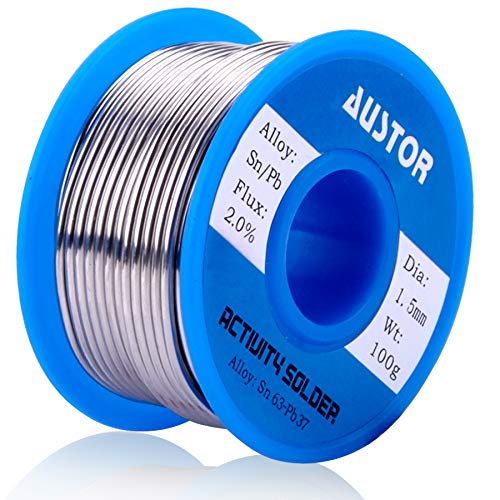
AUSTOR 63-37 Tin Lead Rosin Core Solder Wire for Electrical Soldering (1.5mm, 100g)
- Sn/ Pb: 63% / 37%; Flux: 2.0%; flows well and heats evenly
- Diameter: 1.5 mm (0.059 in); weight of solder wire: 100g (0.22 lb)
- Recommended Melting point: 183°C(361°F )
Looking for a reliable soldering solution? The AUSTOR Tin Lead Rosin Core Solder Wire, with a 1.5mm diameter and 100g weight, could be just what you need! Composed of 63% tin and 37% lead, this solder wire excels at electrical repairs, providing excellent solderability and thermal conductivity. With a recommended melting point of 183°C, it’s perfect for a variety of projects. Just remember, it contains lead, so handle it with care. Rated 4.7 out of 5 stars, customers love its performance! Plus, with a 30-day return policy, you can purchase confidently and get your projects done!
Best For: Hobbyists and professionals looking for a reliable solder wire for electrical repairs and projects.
Pros:
- Excellent solderability and thermal conductivity for efficient electrical repairs.
- Rated 4.7 out of 5 stars from nearly 500 customers, indicating high satisfaction.
- 30-day return policy provides peace of mind for purchases.
Cons:
- Contains lead, which may pose health risks and require careful handling.
- Melting point of 183°C may not be suitable for all soldering applications.
- 100g weight might not be sufficient for larger projects or frequent use.
60/40 Tin Lead Solder With Rosin Core For Electrical Soldering 1.0mm 50g

SONEAK 60/40 Tin Lead Solder With Rosin Core For Electrical Soldering 1.0mm 50g
- Tin Lead Solder Wire: High quality Rosin Core Solder Wire
- Sn60-40 Solder: Sn60, Flux 2.0 %; Diameter:1.0 mm/0.039 inch
- Lower Melting Point: 361 F/183 C, easy to be soldered, flows smoothly, soldering fast and strong shiny soldering point
Discover the convenience of the 60/40 Tin Lead Solder with Rosin Core, perfect for anyone tackling electrical soldering projects at home! This solder, with a diameter of 1.0 mm, flows smoothly at a lower melting point of 361°F (183°C). You’ll love how easy it is to use, giving you shiny, strong joints without creating too much smoke. Whether you’re repairing toy electronic circuits or working on stereo equipment, this solder is an ideal choice for all your DIY needs. Just remember, it contains lead, so take proper precautions. Happy soldering, and enjoy those reliable connections!
Best For: Hobbyists and DIY enthusiasts looking for effective and reliable soldering solutions for electrical projects.
Pros:
- Easy to use with a smooth flow and strong, shiny solder joints.
- Lower melting point (361°F/183°C) makes it suitable for delicate electronics.
- Produces less smoke, ensuring a cleaner working environment.
Cons:
- Contains lead, which poses health risks if not handled properly.
- Not suitable for lead-free soldering applications in sensitive electronics.
- Requires appropriate safety precautions while using, such as ventilation and protective gear.
Factors to Consider When Choosing Solder Wire Rosin Core

When choosing rosin core solder wire, reflect on a few key factors! You’ll want to contemplate wire diameter, melting point, and even the lead content to match your project needs. Also, don’t forget to check the flux percentage and application suitability to guarantee your soldering goes smoothly!
Wire Diameter Variations
Choosing the right wire diameter for your rosin core solder wire can feel overwhelming, but it’s actually pretty simple once you know what to look for! So, let’s break it down. Wire diameters typically range from 0.3mm to 1.5mm. If you’re working on delicate electronics, a thinner 0.3mm wire is perfect for those fine connections. For larger jobs, like quick repairs, try a thicker 1.5mm wire. Remember, thicker wires apply solder faster, but might not fit into tight spaces. Plus, thinner wires need less heat, making them great for low-temperature jobs. With various sizes available, you can find the right match whether you’re a hobbyist or a pro! Happy soldering!
Melting Point Considerations
Understanding melting point considerations is essential for achieving great solder joints and protecting your components. The melting point, usually around 361°F (183°C), dictates when the solder shifts from solid to liquid, which affects your soldering ease and joint quality. Lower melting points make it easier to solder without damaging delicate electronics. Different solder compositions, like 60/40 or 63/37 tin-lead ratios, share similar melting points but can differ in flow and joint strength. Always choose a solder wire with a melting point that fits your specific components to guarantee peak performance. This careful selection helps secure that your solder joints are reliable and long-lasting. Happy soldering! You’ve got this!
Lead Content Levels
Selecting the right solder wire involves considering several factors, especially the lead content levels. Most commonly, you’ll find formulations like 60/40, which has 60% tin and 40% lead, or 63/37, with 63% tin and 37% lead. Higher lead content can make solder flow better and melt at lower temperatures, easing your repairs. But remember, lead can be hazardous to your health! That’s why some areas have strict rules, like California’s Proposition 65, warning about risks. If you’re concerned, consider lead-free options, although they might require higher temperatures. Just keep in mind, the best choice depends on your specific project and the trade-offs between performance and safety. Make smart choices for safe, effective soldering!
Flux Percentage Importance
When you’re picking out rosin core solder wire, the flux percentage plays a big role in how well your soldering goes! A higher flux content, usually between 1.8% and 2.0%, helps remove oxidation from metal surfaces, resulting in stronger solder joints. This means better flow and fewer cold solder joints, which can lead to failures. But don’t go overboard! Too much flux can create extra smoke and residue, making everything messy. You need a balance that fits your specific project. For electronics, for example, choosing the right flux percentage is key for heat sensitivity and material compatibility. So, think about your needs, and pick wisely—it’ll make a real difference in your soldering success!
Application Suitability
Choosing the right rosin core solder wire can make a huge difference in your projects! Start by considering the diameter; smaller wires, like 0.3mm, are perfect for delicate electronic components, while larger ones, around 1.5mm, work best for heavy-duty tasks. Next, think about the tin-lead ratio. A 63/37 blend offers a lower melting point, making it ideal for sensitive electronics. Don’t forget about flux content; higher percentages, between 1.8% and 2.0%, enhance flow and reduce oxidation! Low melting point solder helps control heat and protects components from damage. Finally, always match the solder to your application—like circuit boards or appliances—since each use may need different properties to guarantee quality and reliability. Happy soldering!
Packaging Weight Options
After you’ve selected the right solder for your projects, it’s time to evaluate packaging weight options that fit your needs! Solder wire comes in various weights, usually between 50g and 100g. If you’re an occasional user or just tackling small repairs, a 50g roll might be perfect for you. However, if you’re frequently soldering or handling bigger projects, going for 100g can save you money in the long run! Thicker wires, like 1.5mm, need more weight than thinner ones, such as 0.3mm. So, when choosing, think about the diameter too. Picking the right weight and diameter combo means better performance and less waste, making your soldering experience more enjoyable and efficient!
Health and Safety Warning
While it might be easy to overlook, health and safety warnings are essential when you’re picking the right rosin core solder wire! Lead-containing solder can pose serious health risks, like birth defects and reproductive harm. So, it’s vital to check for health warnings on product labels. When using lead-based solder, make sure you’re in a well-ventilated area, and don’t forget to wear protective gear! Always dispose of any lead solder according to your local hazardous waste regulations, or you could harm the environment. Remember, safety first! Stay informed about the solder you choose, and follow all safety guidelines to minimize risks. This way, you can work confidently while creating those reliable electrical connections!
Frequently Asked Questions
Can I Use Rosin Core Solder for Plumbing Applications?
You shouldn’t use rosin core solder for plumbing applications. While it may seem tempting, it won’t hold up well in water. Instead, opt for lead-free solder specifically designed for plumbing—like silver-bearing solder. This type guarantees strong, leak-proof joints that last. Remember, water and rosin just don’t mix! So, stick to the right solder for your pipes, and you’ll be golden. Happy plumbing!
What Is the Shelf Life of Rosin Core Solder Wire?
The shelf life of rosin core solder wire is typically around five years, but it can last longer if stored properly. Keep it in a cool, dry place away from moisture. If you notice a change in color or a crusty appearance, it’s best not to use it. Make sure to check your supplies regularly. You’ll be ready for any project, big or small, with fresh materials on hand! Happy soldering!
Is Rosin Core Solder Safe for Electronics?
Yes, rosin core solder is safe for electronics! It melts smoothly and leaves minimal residue, so your connections won’t get gunky. Plus, it works wonders for joining wires, circuit boards, and other electronic parts. Just remember, when you’re soldering, use proper ventilation and avoid inhaling fumes! If you follow these simple steps, you’ll guarantee safe and reliable results. So immerse yourself and create those amazing projects with confidence!
How Do I Properly Store Solder Wire?
To properly store solder wire, keep it in a cool, dry place! Use a spool holder or a container to prevent tangling and dust buildup. If you can, keep it wrapped in plastic to avoid moisture. Place it away from direct sunlight and heat sources, too. This way, your solder wire stays fresh and ready for your next project! It’ll make your soldering work easier and more efficient!
What Is the Difference Between Leaded and Lead-Free Solder?
The main difference between leaded and lead-free solder is the composition. Leaded solder contains lead, which helps with melting and flow, making it easier to work with for many people. On the other hand, lead-free solder uses metals like tin and copper, making it safer for the environment and our health. While lead-free can be trickier, many enjoy the challenge. Ultimately, your choice depends on your project needs and safety preferences!


