As an Amazon Associate, we earn from qualifying purchases. Some links on this site are affiliate links at no extra cost to you. Our recommendations are based on thorough research and editorial judgment.


The Ultimate Guide to the Best Arpeggiator Hardware for Musicians in 2026

If you’re looking for the best arpeggiator hardware in 2026, consider the NDLR Multi-part Polyphonic MIDI Sequencer Groove Box! It connects easily to 8 synthesizers, features two arpeggiators, and offers an intuitive interface with a color LCD. Plus, it allows for fantastic performance flexibility with multiple patches. Keep in mind the weight and price, too, as those matter! You’ll discover more essential factors to strengthen your music-making game when you explore further!
Key Takeaways
- Look for versatile connectivity options that allow integration with multiple synthesizers and MIDI hardware for maximum flexibility in sound design.
- Prioritize intuitive user interfaces with dedicated controls to enhance real-time performance and ease of navigation.
- Consider durability and build quality to ensure long-lasting investment and consistent performance throughout your music production journey.
- Check for regular software updates and robust customer support to maintain equipment functionality and compatibility with evolving technology.
- Pay attention to user reviews and industry awards as indicators of reliability, innovation, and overall satisfaction with arpeggiator hardware.
NDLR Multi-part Polyphonic MIDI Sequencer Groove Box
Sale

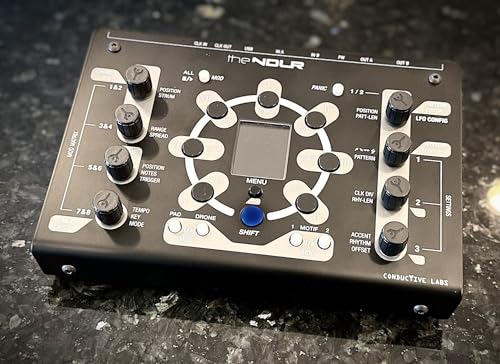
Conductive Labs The NDLR Multi-part Polyphonic Interval MIDI Sequencer Groove Box - 2 Sequenced...
- Playing: Select a Key, Mode and Tempo, and The NDLR keeps all of the parts playing in time and in-key. Start and stop parts with dedicated buttons, turn the knobs to...
- User Internface: Features a color LCD screen for configuration and monitoring of settings, knobs for changing the part's sound, and buttons for real-time jamming
- MIDI Connectivity: Equipped with two sets of 5-pin DIN MIDI inputs and outputs, and four USB MIDI virtual ports for extensive connectivity options, plus CV clock I/O
If you’re a musician keen to explore the world of electronic music, the NDLR Multi-part Polyphonic MIDI Sequencer Groove Box is a fantastic choice! This powerful device can control up to 8 synthesizers at once, making it perfect for creating immersive soundscapes. With features like two sequenced arpeggiators, a chord player, and a drone player, you’ve got endless possibilities for your tracks! Its intuitive user interface, complete with a color LCD screen, makes it easy to navigate. Plus, it connects seamlessly with a wide range of MIDI hardware and software. Immerse yourself and start crafting your electronic masterpieces!
Best For: Musicians and producers looking to enhance their electronic music production with an easy-to-use, versatile MIDI sequencer that can control multiple synthesizers simultaneously.
Pros:
- Versatile Connectivity: Can control up to 8 synthesizers and connects with various MIDI-capable hardware and software.
- Intuitive User Interface: Features a color LCD screen and dedicated buttons for easy navigation and real-time control.
- Performance Flexibility: Allows saving of multiple performance patches, motif sequences, and rhythm settings for quick recall during live or studio sessions.
Cons:
- Weight: At 2.84 pounds, it may be considered slightly heavier compared to some other portable MIDI devices.
- Customer Ratings: Holds a modest rating of 3.7/5 stars based on customer reviews, indicating mixed feedback.
- Price Point: May be a higher investment for hobbyists compared to simpler MIDI solutions available on the market.
Factors to Consider When Choosing Arpeggiator Hardware

When you’re picking out arpeggiator hardware, there are a few important factors to think about. Check out the connectivity options, how user-friendly the interface is, and the sound modification features. Also, consider performance patch storage and the size, especially if you’re on the go!
Connectivity Options Available
Choosing the right arpeggiator hardware is exciting, especially when you think about how important connectivity options are! Look for devices with multiple MIDI ports, like the classic 5-pin DIN inputs and outputs. This guarantees your setup can work with various synthesizers and sequencers. Don’t forget USB MIDI ports, making it easy to connect to computers and digital audio workstations, whether you use Windows, Mac, or Linux! Check the number of virtual MIDI ports, too; more ports mean you can control more external gear at once. Evaluate MIDI over USB support for a simpler connection to modern equipment. It’s all about making your creative flow smoother—having a user-friendly interface helps you adapt quickly during those live gigs or studio sessions!
User Interface Functionality
A great user interface can truly elevate your experience with arpeggiator hardware! Look for a user-friendly design with a color LCD screen, making configuration and monitoring easy during live performances or studio sessions. Having dedicated buttons for real-time control means you can make quick adjustments and respond instantly, improving your performance flow! Plus, intuitive layouts reduce the learning curve, letting you focus on creating music instead of getting lost in menus.
Knobs for sound modification give you tactile feedback to tweak parameters, while chord buttons let you change chords on the fly, sparking your creativity. In the end, a smooth user interface can unleash your musical potential—so choose wisely!
Sound Modification Features
Finding the right sound modification features in arpeggiator hardware can truly enhance your music-making experience! Look for knobs and buttons that let you control tempo, note length, and swing in real-time. These intuitive controls make crafting your sound enjoyable! Many devices also offer modulation options, altering pitch, velocity, and filter settings for a dynamic touch. Plus, built-in effects like reverb and delay let you shape your sound without extra gear—super convenient! An intuitive user interface, little things like a color LCD screen, makes monitoring and adjusting settings a breeze. Remember, these features help transform boring sequences into lively music that inspires you. Explore your options, and find the perfect fit for your style!
Performance Patch Storage
How can you make your live performances smoother and more dynamic? One key factor is the number of performance patches your arpeggiator can store. Look for a device that offers at least eight patches, so you can quickly access various musical ideas without reprogramming settings. This feature cuts down on downtime between songs, letting you focus on performing instead of tinkering! Plus, being able to save and organize motifs or rhythm sequences adds excitement and flair to your music. It’s also super helpful if the hardware lets you easily manage stored patches—think categorization, renaming, and simple navigation. This way, you can keep your creative flow intact and impress your audience every time!
Size and Portability
When it comes to arpeggiator hardware, size and portability can make all the difference for musicians on the move. You’ll want something lightweight—ideally, between 2 to 3 pounds—to easily carry to gigs. Aim for a compact size under 10 inches wide and 3 inches tall; this way, it’ll fit nicely in your bag! USB-powered devices are a game changer, eliminating bulky adapters. Check for durable yet lightweight materials, so you don’t add unnecessary weight to your gear. Finally, if it has a user-friendly interface, that’s a huge plus! You’ll be set up and ready to play in no time, even when traveling. Go for convenience, and your music will shine no matter where you are!
Compatibility With Synthesizers
Compatibility is key when you’re choosing an arpeggiator to integrate with your synthesizers! You want one that connects with both modern digital devices and vintage analog classics. Look for arpeggiators with various MIDI output options, like 5-pin DIN connections and USB ports, to guarantee you can hook up different gear. Some models can even control multiple synthesizers at once—up to eight units! This feature really boosts your workflow. Plus, check if the arpeggiator works with popular DAWs and soft synths to expand its capabilities. Finally, make sure it supports standard MIDI protocol for smooth operation with MIDI-compatible synthesizers. This way, you’ll have the flexibility you need to create amazing music!
Price Range Considerations
Finding the right arpeggiator doesn’t have to be an intimidating task, especially when you evaluate your budget! Prices can range from about $100 for basic models to over $1,000 for high-end gear. If you’re serious about music but don’t want to break the bank, look at the mid-range options between $300 and $600. These usually give you great features and sound quality. Check out the value for money, as pricier models may offer advanced features like multiple sequencers. Don’t forget to assess warranty and customer support too, especially with budget devices. Ultimately, choose an arpeggiator that meets your needs without compromising essential features. Happy shopping, and may your music soar!
Brand Reputation Factors
Choosing the right arpeggiator hardware can feel overwhelming, especially with so many brands out there! Pay attention to brand reputation; it can make a big difference in your purchase. Established brands often have a proven track record of quality, reliability, and innovation. Look for positive reviews and testimonials from users to see how a product performs over time. Don’t forget to check the customer support—strong brands typically offer better warranty services and troubleshooting assistance. Brands that provide regular software updates guarantee your hardware stays compatible with the latest technology, adding longevity. Finally, consider any industry awards; these recognitions reflect a brand’s commitment to excellence! Trustworthy brands will enhance your overall experience and satisfaction.
Frequently Asked Questions
Can Arpeggiators Enhance Live Performances for Musicians?
Yes, arpeggiators can truly enhance your live performances! They help you create interesting melodies and rhythm patterns on the spot. Imagine turning a simple chord into an exciting cascade of notes, keeping your audience engaged! You can experiment with different tempos and styles, adding variety to your set. Plus, they’re easy to sync with drum machines or keyboards, making live shows feel more dynamic. You’ll love the creative possibilities they bring!
What Genres Benefit Most From Using Arpeggiator Hardware?
Genres like electronic, pop, and ambient music thrive with arpeggiator hardware! Imagine lush soundscapes or catchy melodies that dance around your audience. Arpeggiators add movement, bringing life to your music. Genres such as trance and house utilize them to create pulsating rhythms, while rock musicians can enhance their solos with unexpected notes. Even jazz can benefit, injecting improvisational flair. So, plunge into it and watch your sound transform into an engaging journey!
Are There Standalone Arpeggiators Without MIDI Connectivity?
Yes, there are standalone arpeggiators without MIDI connectivity! These devices often come with built-in sounds and can create interesting patterns on their own. For example, some popular models include the Korg Volca or Arturia MicroFreak. You can explore their presets and tweak settings, making music creation fun and accessible! Just plug in your headphones or speakers, and you’re ready to jam! It’s a great way to immerse yourself in music without a computer.
How Do Arpeggiators Differ From Traditional Sequencers?
Arpeggiators and traditional sequencers are like apples and oranges! While both create music, they do it differently. An arpeggiator takes a single chord and plays its notes in a sequence, creating interesting patterns. In contrast, sequencers can arrange entire songs, controlling multiple instruments and notes over time. For example, if you play a C major chord, the arpeggiator might cycle through C, E, and G, while a sequencer records every note you play.
Can I Sync Multiple Arpeggiators in a Setup?
Yes, you can definitely sync multiple arpeggiators in your setup! It’s a great way to create more complex patterns. You’ll need a MIDI clock to keep everything in time. Just connect your arpeggiators to the same MIDI network, and set them to follow the same tempo. For example, using a central MIDI controller can help everyone stay in sync. This technique adds depth and richness to your music, so give it a try!


