As an Amazon Associate, we earn from qualifying purchases. Some links on this site are affiliate links at no extra cost to you. Our recommendations are based on thorough research and editorial judgment.


How to Overcome Performance Anxiety as a New Musician

To overcome performance anxiety as a new musician, start by arriving early at the venue and practicing thoroughly. Use deep breathing techniques to calm your nerves and visualize a successful performance in your mind. Remember, your audience wants to enjoy the music, not judge your every move! Mistakes are part of live performances, so embrace them. Build a support network with fellow musicians who understand your feelings. There are many more helpful tips to explore!
Key Takeaways
- Arrive early to familiarize yourself with the performance venue, reducing nervousness and enhancing comfort.
- Develop a consistent pre-performance routine that incorporates relaxation techniques and deep breathing exercises.
- Practice visualization techniques to mentally rehearse the performance and anticipate success.
- Connect with fellow musicians to share experiences and normalize feelings of performance anxiety.
- Maintain your instrument in optimal condition to prevent distractions and boost your confidence during performances.
Understand Performance Anxiety
Understanding performance anxiety is essential for anyone who steps onto a stage, whether it’s for a concert, a speech, or even a school presentation. Over 80% of musicians experience this challenge at some point in their careers! Such anxiety often arises from childhood and deeper issues, like feeling inadequate or having imposter syndrome. Symptoms can include tremors, sweaty palms, and negative thoughts, often hindering a successful performance. Notable artists, such as Barbra Streisand and Adele, openly share their struggles with stage fright, showing that it’s a common concern. By recognizing these feelings, musicians can reframe their self-worth and expectations, making coping with stage fright more manageable. It’s important to understand you’re not alone in this journey! Additionally, regular practice of aural skills can enhance your confidence and reduce anxiety during performances due to improved musical skills.
Practical Preparation Techniques
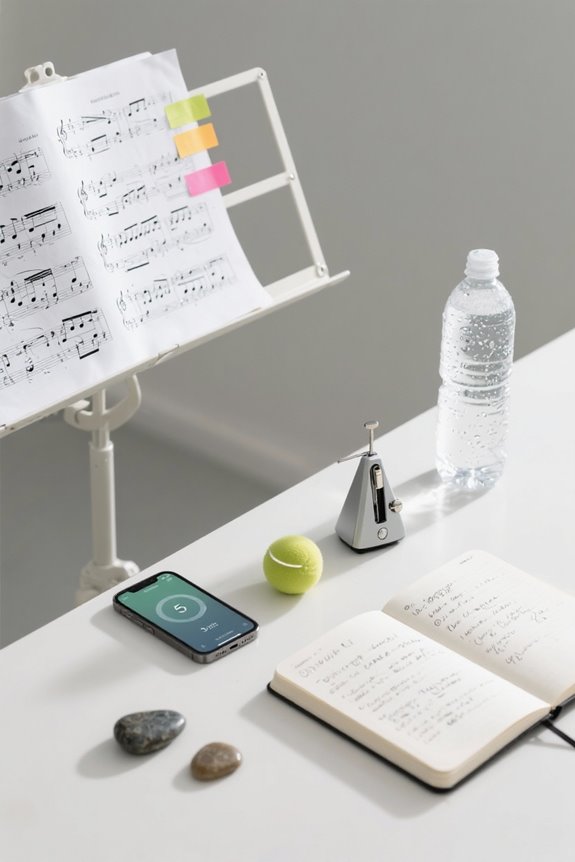
Many performers find that practical preparation techniques can greatly ease performance anxiety. Arriving early at the venue allows musicians to familiarize themselves with their surroundings, reducing nerves. Thorough practice is key, as it builds mastery and boosts confidence, making the performance feel second nature. Visualizing the performance space during practice sessions helps create mental familiarity, ensuring smooth sailing on the big day. It’s important to avoid trying new equipment, which can add distractions and increase anxiety. Additionally, establishing a pre-performance routine that includes warming up can set the right mood. Remember, practice not only sharpens skills but also prepares the mind. With these techniques, musicians can approach their performance feeling ready and relaxed! Furthermore, utilizing ergonomic design features can enhance comfort during practice sessions, helping to further reduce anxiety.
Breathing and Grounding Exercises
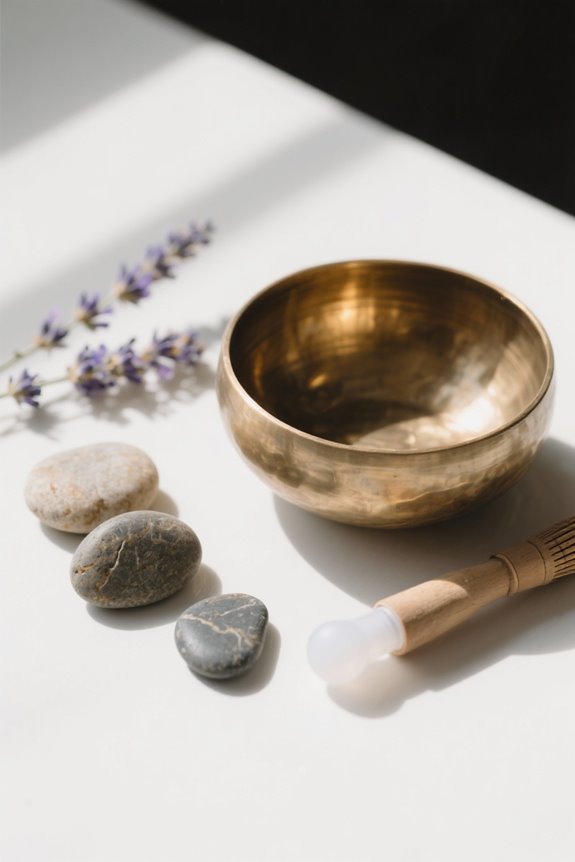
Taking a deep breath can sometimes be the first step in overcoming performance anxiety. Practicing slow, deep breathing techniques, like box breathing, can help calm nerves. Inhale for four beats, hold for four, and exhale for four. Grounding exercises are equally effective; simply pay attention to your surroundings or focus on your senses. These practices help center your mind and reduce anxiety before a performance. Establishing a consistent pre-performance breathing routine can automate these calming techniques. Integrating mindfulness into your breathing further enhances your focus, shifting attention from anxious thoughts to the joy of making music. Additionally, using high-quality microfiber cloths to maintain your instrument’s cleanliness can also boost your confidence during performances, as a well-cared-for instrument enhances appearance and sound quality. Remember, regularly practicing these breathing and grounding exercises can not only prepare you for performances but also help manage anxiety in daily life!
Reframe Your Mindset

While it might feel overwhelming at times, performance anxiety is a normal experience that many musicians face. To combat these nerves, musicians can reframe their mindset. Instead of seeing anxiety as fear, they can view it as excitement. This shift helps harness adrenaline positively, turning jitters into energy! Recognizing that making mistakes is part of live performance can reduce pressure, allowing musicians to focus on the joy of sharing music. Visualization techniques, where new musicians imagine successful performances, enhance confidence by preparing the mind for success. Incorporating comprehensive lesson plans into practice routines can provide essential skill development and reduce uncertainties about performance. Finally, remembering that the audience is there to enjoy the experience, not to critique, helps shift focus away from self-doubt. Embracing these strategies makes performances more enjoyable!
Engage With Your Audience

How can engaging with the audience transform a performance? By connecting with listeners, musicians can create a warm and supportive atmosphere that eases anxiety. Sharing a personal story about a song helps audience members relate, making them feel invested in the performance. Simple actions, like greeting the crowd or making eye contact, remind the performer that people are there to enjoy the music, not judge it. It’s important to remember, audience members often focus more on their own thoughts than on perceived flaws. Additionally, incorporating moments of interaction, like asking rhetorical questions or sharing thoughts between songs, can distract musicians from their nerves and promote a relaxed mindset. Engaging creates a shared experience that enhances the performance for everyone! Furthermore, having the right equipment, such as a mini practice amp, can facilitate effective rehearsals and boost a performer’s confidence in front of an audience.
Build a Support Network
Building a support network can work wonders for overcoming performance anxiety. Connecting with fellow musicians helps normalize feelings of stress in challenging situations. By engaging with more experienced musicians, newcomers can gain valuable insights and coping strategies to boost their confidence. Joining local music groups or online forums fosters a sense of belonging, allowing musicians to share both struggles and successes. Participating in group rehearsals or performances builds camaraderie, where musicians can witness their peers facing similar fears. This collective experience can be reassuring and motivating! A strong support network can also promote accountability, encouraging regular practice and the effective use of anxiety management techniques. Moreover, integrating music bingo activities into group sessions can further enhance collaboration and enjoyment among musicians. Embrace this helpful resource, and watch your confidence in performances grow!
Embrace Mistakes and Learn
Mistakes can be seen as valuable stepping stones rather than obstacles when it comes to performances. It’s important to embrace mistakes, as they are a natural part of sharing music. Even famous artists like Adele and Barbra Streisand have faced performance anxiety and errors on stage! Recognizing that the audience is often more interested in connecting with the music than in spotting flaws can alleviate much pressure. Each performance is unique, so framing mistakes as learning moments helps reduce fear. Focus on expressing emotions through music, rather than chasing perfection. Additionally, talking with fellow musicians about these experiences can create a supportive community. Ultimately, embracing mistakes leads to growth, stronger audience connection, and a healthier approach to performing! Remember, as with practicing harmonica techniques, regular engagement with your music enhances confidence and reduces anxiety.
Prioritize Your Wellbeing
Prioritizing wellbeing is essential for musicians aiming to conquer performance anxiety. Physical health plays a big role; regular exercise, a balanced diet, and enough sleep can help musicians feel more mentally clear. Also, mindfulness practices—like breathing exercises and meditation—can calm nerves before stepping on stage, making it easier to focus on the performance. Building a routine that includes relaxation techniques, such as yoga, enhances overall wellbeing, helping manage stress. Emotional support is vital, too. Discussing challenges with fellow musicians or mentors creates a sense of community. Finally, accessing tailored mental health resources designed for musicians offers important tools to tackle performance anxiety and improve personal wellbeing. Additionally, maintaining optimal humidity levels for instruments ensures they remain in peak condition, which can also contribute to a musician’s overall confidence. A holistic approach can truly make a difference!
Frequently Asked Questions
How to Deal With Musical Performance Anxiety?
To deal with musical performance anxiety, individuals can practice mindfulness techniques, engage in breathing exercises, and utilize positive visualization. These strategies enhance focus, promote relaxation, and foster confidence, ultimately leading to a more enjoyable performance experience.
How Do You Get Rid of Performance Anxiety?
To alleviate performance anxiety, individuals can utilize mindfulness techniques, practice visualization exercises, and incorporate breathing strategies. These approaches help shift focus, promote relaxation, and foster a more positive mindset before and during performances.
What Do Musicians Take for Performance Anxiety?
Musicians often explore medication options like beta blockers, embrace natural remedies such as valerian root, and practice mindfulness techniques, seeking both physical relief and mental clarity akin to a modern-day bard preparing for a grand performance.
Why Do Musicians Get Performance Anxiety?
Musicians experience performance anxiety, or stage fright, due to psychological factors like fear of judgment and imposter syndrome. Understanding this can lead to effective coping mechanisms, helping them manage their anxiety and enhance performance confidence.