As an Amazon Associate, we earn from qualifying purchases. Some links on this site are affiliate links at no extra cost to you. Our recommendations are based on thorough research and editorial judgment.


Why Playing Fun” Songs Matters More Than Perfect Technique”

Playing fun songs is important for musicians because it nurtures creativity and promotes enjoyment. When musicians focus on playful tunes, they can experiment and develop their personal style. Mistakes become learning opportunities that help build confidence and connect emotionally with audiences. Familiar songs reduce performance anxiety, letting musicians focus on the joy of playing. Plus, sharing music with others fosters community and fulfillment. Discover more about how this approach enriches the musical journey!
Key Takeaways
- Playing fun songs enhances enjoyment and creativity, leading to memorable musical experiences and personal expression.
- Mistakes during performances foster a growth mindset, encouraging exploration and unique musical interpretations.
- Emotional delivery connects with audiences, often surpassing the importance of technical accuracy in creating lasting impressions.
- Engaging with enjoyable music reduces performance anxiety, promoting a relaxed, playful atmosphere for musicians.
- Community collaboration and shared enjoyment enrich the musical journey, emphasizing connection and personal fulfillment over perfection.
The Joy of Playing Fun Songs
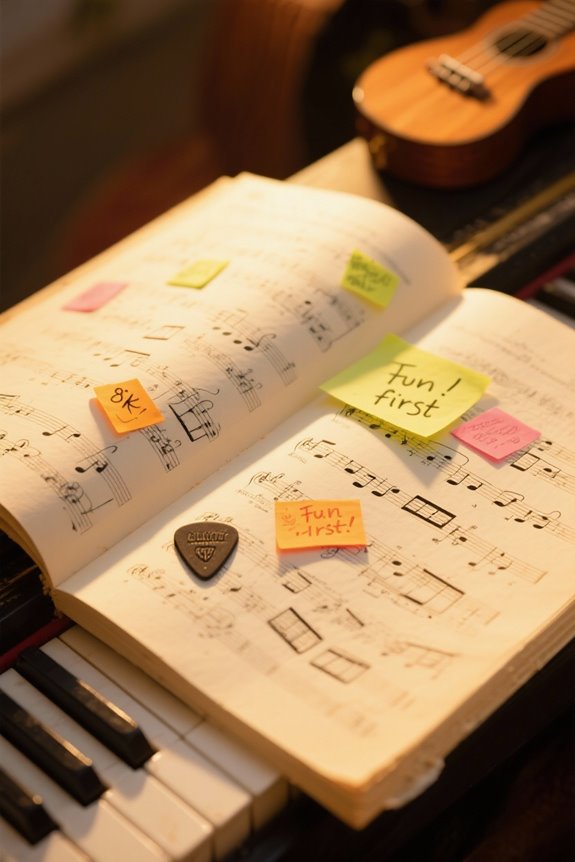
The joy of playing fun songs can transform a musician’s experience in delightful ways. When musicians embrace lively tunes, they often feel a renewed passion for their instrument. This sheer enjoyment invites experimentation, allowing personal style and creativity to flourish. Fun songs can also serve as memorable starting points for developing new skills. Plus, sharing these popular pieces in group settings creates a sense of community, enhancing social interactions. Focusing on playful music reduces performance anxiety, empowering musicians to concentrate on enjoying the moment rather than aiming for technical perfection. Ultimately, playing fun songs brings joy and a sense of freedom, making practice sessions much more exciting. Incorporating tools like ukulele chord charts can further enhance the enjoyment and ease of learning your favorite tunes. So, grab your instrument, and let the fun begin!
Embracing Mistakes as Learning Opportunities

Many musicians face moments of uncertainty when things don’t go as planned, but embracing mistakes can be a game-changer! Rather than seeing errors as setbacks, viewing them as learning opportunities can open up creativity while playing a song. For instance, a wrong note can lead to a unique twist that enhances the music! Acknowledging mistakes helps cultivate a growth mindset, reminding musicians that challenges are part of the journey. When performing in front of an audience, these imperfections can create relatable moments, deepening connections with listeners. Collaborating with fellow musicians and sharing feedback on mistakes strengthens community support. Ultimately, mistakes can guide focused practice, helping musicians improve and build confidence over time. Embrace those slip-ups—they’re all part of the fun! Additionally, understanding the importance of proper cleaning and maintenance for your equipment can prevent future mishaps during practice sessions.
Prioritizing Emotional Connection Over Technical Flawlessness

How can musicians truly connect with their audience beyond simply hitting all the right notes? The answer lies in emotional delivery. Musicians who focus on the essence of a song can communicate feelings that resonate deeply with listeners. For instance, a unique interpretation of a beloved classic may evoke nostalgia or joy, enhancing listener engagement. Curiously, research shows that mistakes during performances can foster authenticity, bringing audiences closer to the music. This ability to communicate emotion makes performances relatable, even if they aren’t technically flawless. Ultimately, musicians who prioritize emotional connection create richer narratives that resonate profoundly, leaving audiences feeling something special. Display cabinets with glass doors can serve as a great metaphor, as they emphasize clarity and visibility in showcasing treasured performances. So, let the heart lead the way and embrace the joy of sharing music!
Fostering Creativity Through Enjoyable Tunes

What makes a song truly enjoyable and creative for musicians? When musicians play songs that resonate with them, they find joy and freedom in expressing their emotions. Fun songs encourage creativity, sparking unique interpretations instead of strict technical precision. These enjoyable tunes deepen connections between the musician and their audience, enriching the overall musical experience. Additionally, familiar songs invite improvisation and exploration, creating a nurturing environment for artistic growth. They can also catalyze collaboration within a community, where shared enjoyment leads to learning together. By focusing on fun songs, musicians feel less performance anxiety, allowing them to experiment and enhance their creativity. Furthermore, playing songs that feature enhanced sound quality can elevate the musical experience, making it even more enjoyable. So, pick up your instrument and play songs that make you smile; your creativity will flourish!
Reducing Performance Anxiety

Performance anxiety can be a common hurdle for many musicians, but engaging with enjoyable songs offers a simple yet effective way to ease those nerves. Playing familiar tunes allows musicians to prioritize fun over technical perfection, reducing stress levels considerably. When performing songs that resonate emotionally, confidence naturally increases, creating a positive feedback loop that diminishes performance anxiety. Adopting a playful mindset enables musicians to embrace mistakes, making imperfections feel normal and less stressful. Plus, practicing fun songs can lead to longer, more motivating practice sessions, building comfort in front of others. Additionally, incorporating high-quality rosin options can enhance sound quality and improve performance, further boosting confidence. By focusing on what they love, musicians can transform anxiety into joyful expression, making each performance a delightful experience worth sharing!
Cultivating a Positive Relationship With Music
While it may seem challenging at times, developing a positive relationship with music is essential for any aspiring musician. Focusing on enjoyment rather than perfection makes playing more fulfilling and fun! Musicians who prioritize emotional delivery over technical flaws connect better with their audience, making every performance memorable. Engaging with music in a relaxed way helps ease performance anxiety and boosts self-expression. By exploring creativity through practice, musicians can embrace mistakes as valuable learning experiences, not failures. This positive mindset keeps motivation high and inspires a lasting love for music. Additionally, participating in community engagement features can enhance your learning experience and connect you with other musicians. So, remember, have fun while you play! It’s not just about hitting the right notes; it’s about sharing joy and passion with others!
The Impact of Emotional Expression in Music
Emotional expression in music plays an important role in connecting with listeners, often making performances resonate far beyond mere technical skills. When musicians play their acoustic guitar, those heartfelt emotions can transcend mistakes, creating a powerful impact. Many enjoy music that tells a story or conveys feelings, prioritizing artistry over flawless execution. For instance, a strummed chord while sharing personal experiences can draw listeners in, making them feel understood and engaged. This connection often turns a simple song into a memorable experience. Performances infused with genuine emotion can leave lasting impressions, ensuring audiences remember the passion, not just the precision. Consequently, emotional expression in music is essential for fostering deeper relationships between performers and their fans! Furthermore, utilizing customizable EQ controls can enhance the emotional delivery of a performance, allowing for sound adjustments that amplify the intended feelings in the music.
Learning and Growth Through Personal Exploration
Exploration in music can lead to amazing personal growth and self-discovery! When musicians embrace the joy of learning new songs, they foster a deeper emotional connection to music. This connection fuels motivation, encouraging them to play a song that truly resonates. Fun songs create a relaxed space where mistakes become valuable learning opportunities, helping musicians grow over time. Studies show that those who prioritize enjoyment in their practice tend to stay committed and enthusiastic, paving the way for continuous progress. Additionally, playing music that reflects one’s individuality promotes self-expression, a crucial part of any fulfilling musical journey. Balancing fun songs with skill-building exercises makes practice satisfying and enjoyable, reducing burnout while enhancing overall growth! Furthermore, the flexibility offered by wireless guitar transmitters can help musicians move freely during performances, amplifying their enjoyment and creativity.
The Balance Between Technique and Passion
Musicians often find themselves at a crossroads between honing their technical skills and expressing their innermost feelings through music. Striking a balance between emotion and technique is vital for creating powerful, engaging performances. While mastering technical skills can lay a solid foundation, music can feel dull without emotional input. Think about your favorite songs—don’t they resonate more when they’re filled with genuine feeling rather than just perfect notes? Many successful musicians show that heartfelt performances, often showcasing personal experiences, can leave a lasting impact, even if some technical aspects are imperfect. Additionally, choosing the right cello size selection can significantly enhance your playing comfort and emotional expression. So, embrace your passion! Let it shine through your music, and remember that emotional expression often makes for a richer, more memorable experience for both you and your audience.
Engaging With Music as a Community
Community is the heartbeat of music, bringing together people from all walks of life to share their love for sound. Engaging with music within a community enhances everyone’s experience. Musicians can learn from feedback, refining their arrangements based on what resonates with listeners. This interaction encourages musicians to balance emotional connection with technical skill, leading to richer performances. Collaborating with fellow musicians sparks creativity and opens the door to new ideas. Even when mistakes happen, audience engagement remains essential—those relatable moments can strengthen bonds. Sharing journeys and insights in community spaces allows musicians to gather diverse perspectives, enriching their learning. Additionally, incorporating Boomwhackers color coding into group activities fosters inclusivity and enhances learning. Ultimately, music thrives when shared, so plunge in and join the celebration of sound!
Finding Fulfillment in the Musical Journey
Joy in music often comes from the satisfaction of connecting with melodies and rhythms that resonate deeply with one’s spirit. For musicians like Timothy, prioritizing enjoyment leads to personal connection, making music that feels rewarding. Embracing fun songs invites shared experiences and collaboration with others, creating a community of fellow music lovers. Emotional expression through entertaining pieces can far outweigh the pressure to perform perfectly, resulting in a more satisfying musical journey. As musicians learn songs that spark joy, they explore their artistic skills while staying motivated and engaged. This fun-focused approach helps ease anxiety, allowing creativity to flourish naturally. Ultimately, the journey of music becomes about connection, expression, and the joy of sharing enjoyable moments with others.
Frequently Asked Questions
How Important Is Technique in Music?
Technique in music holds significant importance as it enables musical expression and emotional connection. Mastery of skills enhances performance quality, but the true essence often lies in the ability to convey feelings through sound.
What Is the 3 Minute Rule in Music?
“Time flies when you’re having fun.” The 3 Minute Rule in music maximizes engagement and emotional connection, encouraging concise storytelling and memorable hooks. This duration caters to listeners’ attention spans and enhances replay value in popular songs.
What Is the Scientifically Perfect Song?
The scientifically perfect song, as determined through scientific analysis, embodies a blend of melody, harmony, and rhythmic balance that aligns with musical preferences, effectively engaging listeners through emotional resonance and familiar, yet innovative, structures.
Are Musicians With Perfect Pitch Better?
Musicians with perfect pitch often glide effortlessly through notes, their skill akin to a painter with a flawless palette. Yet, emotional expression, the heart’s brushstroke, ultimately defines musical richness, transcending mere technical prowess.